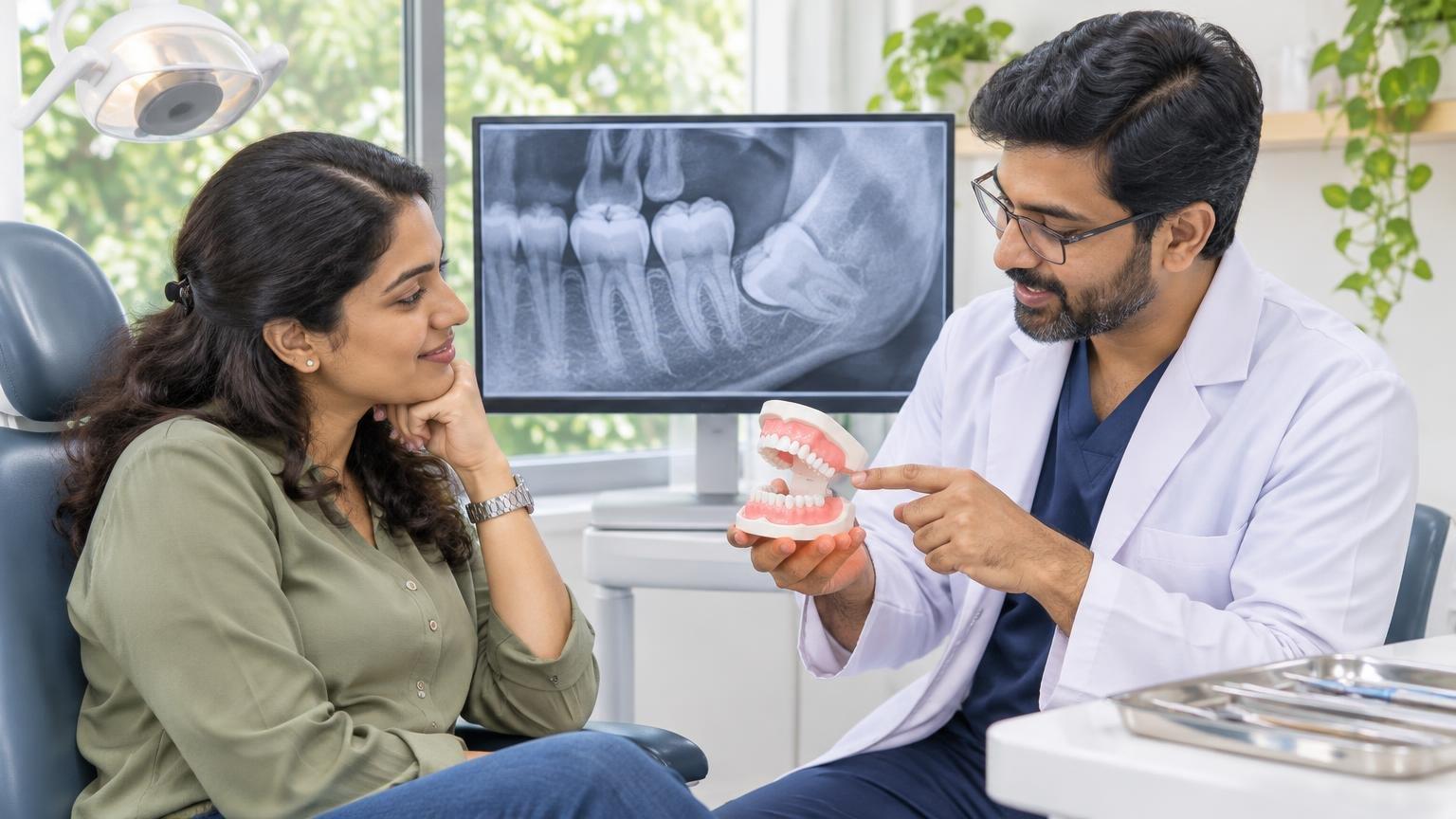
Bone loss does not automatically mean fixed teeth are out of reach. For some people considering all-on-4 implants in Koramangala, carefully placed implants may support a full arch of fixed teeth while reducing or avoiding the need for extensive bone grafting.
We often meet people who have lived with loose dentures, avoided certain foods, or felt less confident when speaking and smiling. The right treatment starts with understanding why bone loss has occurred and whether the remaining bone can support a stable, long-term result.
A Fixed Smile Despite Bone Loss in Indiranagar
Tooth loss can affect far more than the appearance of your smile. Dentures may shift while eating or talking, and reduced chewing comfort can make everyday meals feel like work. Over time, changes in the jawbone and facial support may also affect how you feel about your appearance.
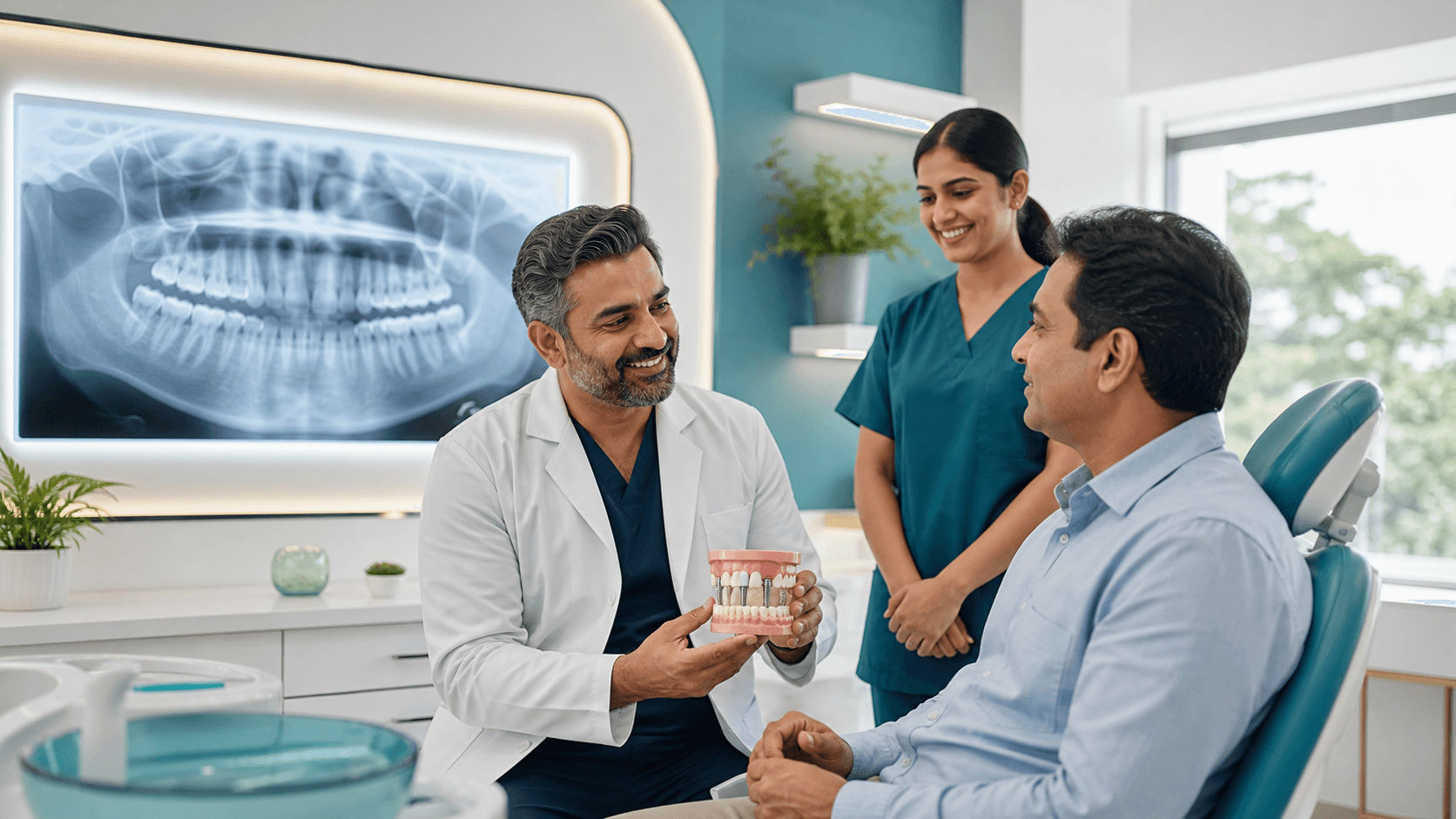
All-on-4 treatment is one possible fixed solution for selected people with bone loss. Rather than placing an implant for every missing tooth, this approach uses a small number of strategically positioned implants to support a full dental arch. In suitable cases, the available bone can be used more effectively, even where bone volume has reduced after tooth loss.
A fixed implant-supported smile may help address concerns such as:
- Dentures that move or feel insecure
- Difficulty chewing a wider range of foods
- Worry about teeth slipping while speaking
- Reduced confidence in social or professional settings
- A desire for teeth that feel more stable than a removable denture
Still, no two mouths are alike. Before we recommend all-on-4 implants in Haudin Road, Bangalore, we assess bone quality and volume, gum health, medical history, bite forces and your goals for your smile. A fixed bridge should be designed around your needs, not fitted into a one-size-fits-all plan.
How All-on-4 Treatment Uses Available Bone
The name all-on-4 refers to a full arch of replacement teeth supported by four implants. Two implants are usually placed towards the front of the jaw, an area that may retain denser bone after tooth loss. The other two are placed further back at an angle.
That angled placement is not simply a technical detail. It can help us make fuller use of the bone that remains while working around structures in the jaw that need careful consideration. For patients with moderate bone loss, this may reduce the need for larger grafting procedures.
However, angled implants are not a shortcut for every situation. If bone loss is severe, uneven or linked to untreated infection, another approach may offer a safer and more predictable outcome. We discuss these choices plainly, so you understand both the possibilities and the limits of treatment.
Planning also goes beyond where the implants sit. The final teeth must look natural, allow you to clean around them, and meet comfortably when you bite. Implant position and bridge design need to work together from the beginning.
When Bone Loss Calls for a Different Solution
Some jaws need more preparation before a fixed full-arch restoration can be considered. Long-standing tooth loss, advanced gum disease or a previous infection may leave bone in areas that cannot reliably support implants without further care.
Depending on the findings, we may discuss options such as:
- Bone grafting to rebuild selected areas
- Procedures related to the upper jaw and sinus area
- Additional implants for broader support
- Removable implant-supported teeth
- Staged treatment that allows time for healing before a fixed bridge
Suitability can also be influenced by smoking, uncontrolled diabetes, teeth grinding, the health of neighbouring teeth and your ability to maintain the restoration. Active gum disease or infection must be managed before implants are placed. This protects the foundation on which any new teeth will rely.
An honest consultation matters because premium care is not about recommending the same treatment to everyone. It is about weighing clinical safety, long-term predictability, aesthetic goals, budget considerations and the daily care needed after treatment. The best plan is the one that fits your mouth and remains practical for you to maintain.
Technology-Led Planning for Predictable Care
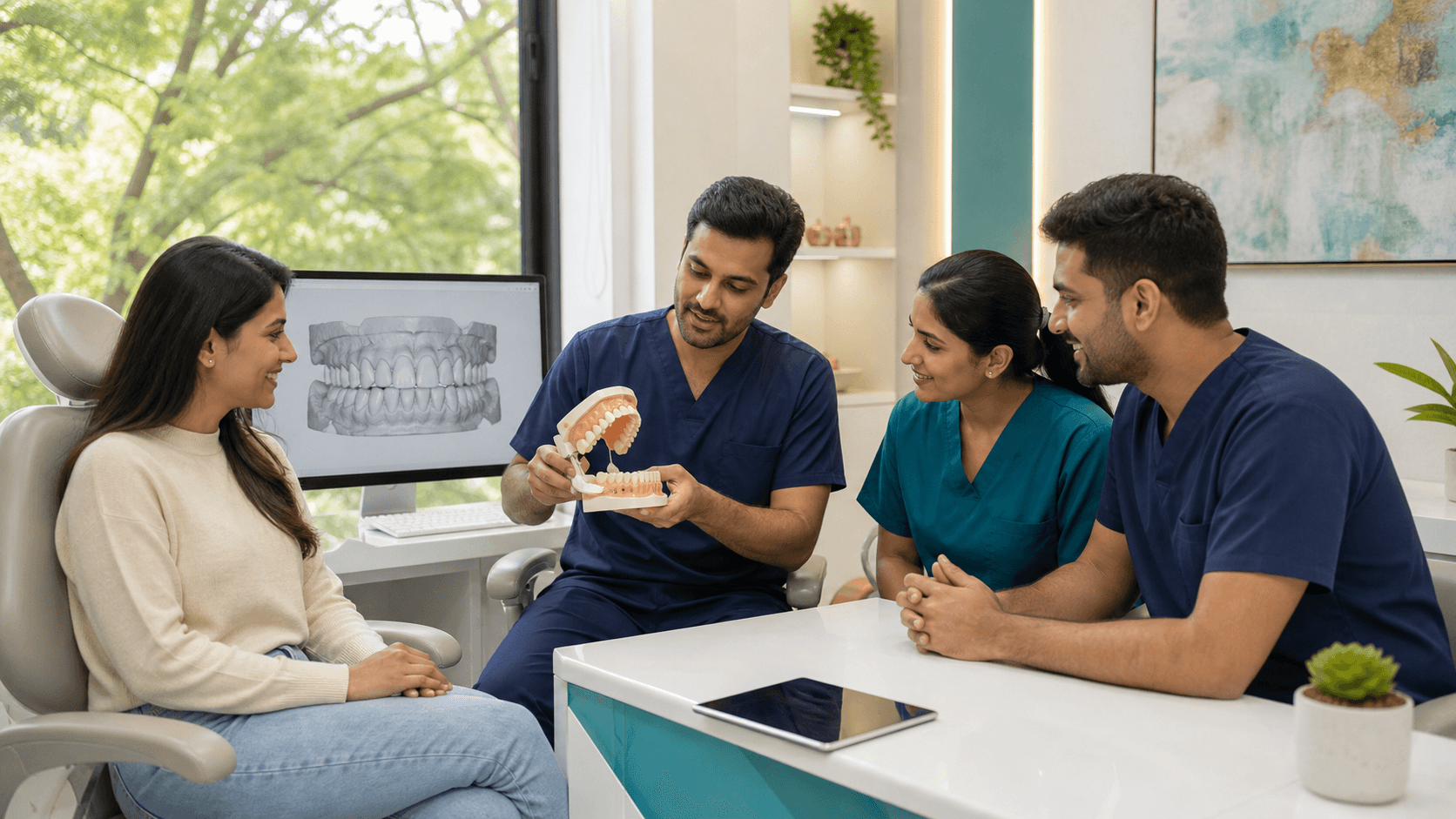
A comprehensive implant plan in M. G road, Bangalore begins with a detailed consultation and clinical examination. Digital imaging and 3D planning allow us to review jawbone volume, identify anatomical limitations and map possible implant positions before treatment begins.
At Ridgetop Dental International, treatment planning considers prosthodontic, periodontal, surgical, endodontic and restorative needs. This coordinated approach is particularly helpful when tooth loss, gum concerns, bite issues and cosmetic goals need to be considered at the same time.
The planning process may include:
- Clinical examination and diagnostic scans
- Assessment of gums, bite and existing teeth
- Digital planning of implant and tooth positions
- Provisional teeth where clinically appropriate
- A final fixed restoration after suitable healing
Timelines vary. Some people may be ready for provisional teeth soon after implant placement, while others need preparatory treatment or a longer healing period. We do not promise immediate results when your bone and gum health call for a more careful pace.
November can be a practical time to start exploring treatment before year-end celebrations and social commitments. Beginning early gives time for scans, thoughtful planning and healing that follows your clinical needs rather than a calendar deadline.
Choosing the Right Path for Your Smile
Denture discomfort or visible gum recession cannot tell you on their own whether all-on-4 implants are suitable. A detailed assessment can clarify whether there is enough bone in strategic areas, whether gum health needs attention first and whether another implant option would offer a stronger long-term result.
A sound decision rests on healthy or treatable gums, stable medical conditions, realistic expectations, a manageable bite and a commitment to lifelong home care and professional reviews. Bone loss can change the treatment plan, but it does not automatically close the door on fixed teeth.
Personalised Guidance for Your Next Step
At Ridgetop Dental International, we provide careful assessments and clear guidance tailored to your oral health needs. Learn how all-on-4 implants in Koramangala may be planned around your bone condition and treatment goals. To arrange a consultation with our team, contact us today.