Confident Smiles with Implants Even If You Have Diabetes
Dental implants can sometimes feel out of reach when you live with diabetes. Many people are told they are not good candidates, or that implants will not work for them at all. Often, this is based on older information or on a very brief look at their health, rather than a careful, individualized plan.
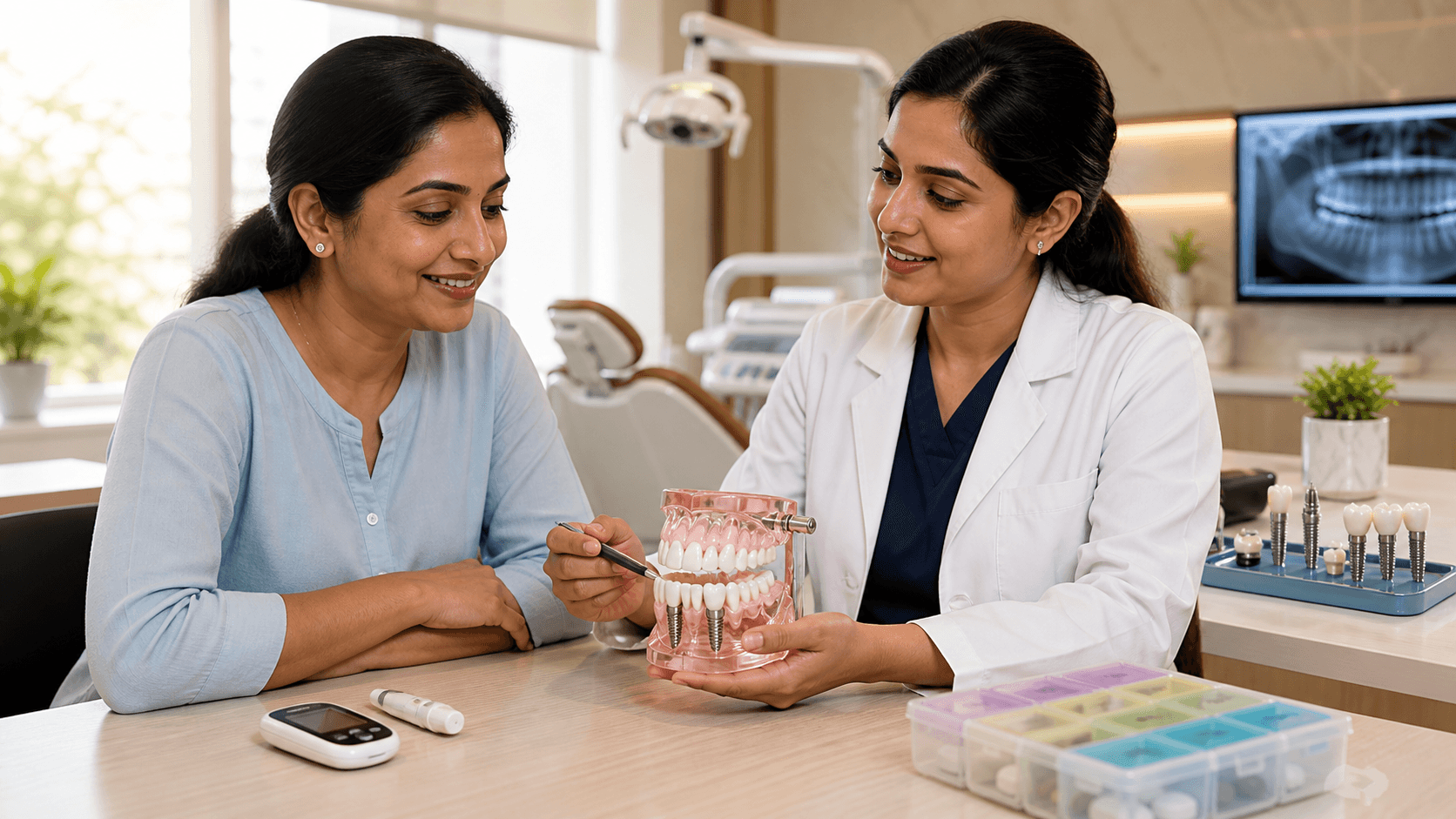
With proper planning, many people with well-managed diabetes can receive dental implants in Bangalore safely. When blood sugar is under control and treatment is planned step by step, implants can be a predictable, stable option to replace missing teeth.
At our specialist-driven clinics in Bangalore, we routinely care for patients with Type 1 and Type 2 diabetes. We pay close attention to medical history, lab reports, and healing patterns. Dental implants for patients with diabetes do require more preparation, closer medical coordination, and a clear recovery plan. Below is an overview of what that involves, in clear and straightforward terms.
How Diabetes Affects Implant Healing and Success
Diabetes mainly affects how the body heals. When blood sugar stays high for long periods, it can:
- Slow down wound healing in the gums and bone
- Increase the risk of infection around the surgical site
- Affect how well the bone joins with the implant surface
- Reduce blood flow in tiny blood vessels in the mouth
For dental implants, we want the bone to grow firmly around the implant. This process is called bone integration. If sugar levels are too high, this bone healing can be weaker or slower.
There is an important difference between well-controlled and poorly controlled diabetes. In broad terms:
- Well-controlled diabetes: HbA1c in a range agreed with your doctor, with most daily readings close to target
- Poorly controlled diabetes: HbA1c above target, frequent very high or very low readings, or long gaps in follow-up
When diabetes is well controlled, implant timing and healing are usually smoother. When control is poor, we may advise working with your physician first, then planning surgery later once readings are more stable.
Other risk factors matter even more in people with diabetes, such as:
- Smoking or tobacco chewing
- Existing gum disease or loose teeth
- Obesity or lack of activity
- Low vitamin D levels
- Poor daily brushing and flossing
We aim to address as many of these as possible before starting implant treatment.
Pre-Op Readiness, Tests and Lifestyle Adjustments
Before planning dental implants in Bangalore, we first make sure your mouth and your general health are ready. A typical pre-operative workup includes:
- Recent HbA1c report
- Fasting and post-meal blood sugar readings
- A full list of your medicines and doses
- A detailed dental examination with digital X-rays or 3D scans
This helps us evaluate the quality and amount of bone, any existing infection, and the condition of your gums and remaining teeth.
Our implant team then coordinates with your diabetologist or primary physician. Together, we consider:
- Whether sugar levels are steady enough for surgery
- Any need to adjust insulin or tablets around the time of the procedure
- The safest time of day for treatment, often when your sugars are more stable
- Timing around festive seasons or holidays, when food patterns usually change
In the weeks before surgery, we often suggest:
- Working toward target sugar levels set by your doctor
- Focusing on balanced meals with fewer sudden sugar spikes
- Professional cleaning and gum therapy, so the mouth is as healthy as possible
- Stopping smoking or pan chewing, or at least cutting down sharply
- Improving sleep, hydration, and basic activity levels
These practical lifestyle adjustments can significantly influence how smoothly you heal.
Medication Coordination and Day-of-Surgery Planning
On the day of implant surgery, the aim is to avoid both low blood sugar and very high blood sugar. This is why we always plan medicine and meal timing together with your doctor.
For diabetes medicines like insulin, metformin, or newer tablets and injections, we may:
- Adjust the morning dose, depending on how long the procedure is
- Plan a light meal or snack before or soon after treatment
- Ask you to bring your glucometer so you can monitor levels
- Keep quick sugar sources available in case of low readings
Our team schedules appointments at times that suit your usual food and medicine pattern, often in the morning when energy is better and sugars are more stable.
Many patients with diabetes also take other medicines, such as:
- Blood thinners for heart or stroke risk
- Blood pressure tablets
- Cholesterol drugs
- Thyroid tablets
- Regular painkillers
We carefully review these with you. Changes to blood thinners, in particular, must be done only with your physician's approval. We also check for allergies before prescribing antibiotics or pain medicines and give clear instructions on when to start and stop each drug.
Post-Op Healing Plan Tailored for Diabetic Patients
Healing after implants is a gradual process. For patients with diabetes, we like to break it into three phases.
First 24 to 72 hours:
- Mild swelling and soreness are common
- Cold compresses on the cheek in short intervals can help
- Soft, cool foods and plenty of water are recommended
- Sugar levels should be checked more often than usual
First two weeks:
- Stitches may be removed if used
- Swelling and discomfort usually reduce within a few days
- Gentle brushing near the area can start as advised
- Prescribed mouth rinses help keep the site clean
Following months until the final crown:
- The implant stays under the gum or with a small cap visible
- Bone slowly joins with the implant
- Regular follow-up visits check healing and sugar stability
- Later, we attach the final crown, bridge, or denture over the implant
At home, a structured routine supports recovery:
- Use the mouth rinse and medicines exactly as prescribed
- Brush gently with a soft brush, avoiding hard scrubbing near the stitches
- Eat soft, nutrient-dense foods like cooked vegetables, soft proteins, and curd
- Avoid chewing on the surgical side until you are cleared to do so
Watch for warning signs such as increasing pain after the third day, growing swelling, pus, persistent bleeding, bad taste, or loose stitches. These should be reported quickly so we can check and treat early. We support healing with planned review visits and, when suitable, digital check-ins for timely guidance between appointments.
Why Consider Ridgetop Dental for Implants with Diabetes
For patients with diabetes, the team and systems behind your treatment are as important as the implant itself. Our clinics are specialist-driven, with MDS-qualified implantologists, periodontists, and prosthodontists who are experienced in treating patients with diabetes and other medical conditions.
We use advanced diagnostics such as CBCT 3D scans and guided surgery techniques to plan the position and angle of each implant with precision. This detailed planning helps protect nerves and sinuses and supports better bone support. We also work with established implant systems and follow strict infection control standards at every step, from sterilization to room preparation.
Because we have multiple locations across Bangalore, many patients find it easier to select a clinic close to home or work. We discuss treatment options, expected timelines, and visit schedules in clear, straightforward language, keeping in mind work hours, school timings, and busy festive periods when your routine may change.
With thoughtful planning, close medical coordination, and a healing plan designed for your individual needs, many people with diabetes can enjoy stable, long-lasting dental implants in Bangalore and smile with confidence again.
Restore Your Smile Comfort And Confidence Today
If you are ready for a long-term solution to missing or failing teeth, we are here to help you take the next step with confidence. At Ridgetop Dental International, our team will walk you through your options for dental implants in Bangalore and create a personalized treatment plan that fits your goals. Reach out to us to schedule a consultation or ask questions about the process through our contact page.