Choosing the Right Start for Your Child's Smile
Early orthodontic care is not only about straightening teeth; it is about guiding how the teeth and jaws grow. The choices made when a child is young, such as using space maintainers or early braces, can shape their future smile, their bite, and even how confident they feel when they smile in photos or talk in class. Many parents in Bangalore start thinking about this when they notice crooked teeth or gaps that do not seem to close.
Parents often have similar concerns. They may ask about crowded teeth, baby teeth that have fallen out too early, thumb sucking that continues, or whether a child really needs braces at a young age. These are all important questions. A pediatric dentist in Bangalore will look at growth, timing, and the child's daily life before suggesting early braces, space maintainers, or, in some cases, careful monitoring with no immediate treatment. In general, pediatric dentists aim to choose the least invasive option that still protects the future smile.
How Pediatric Dentists Assess Growing Smiles
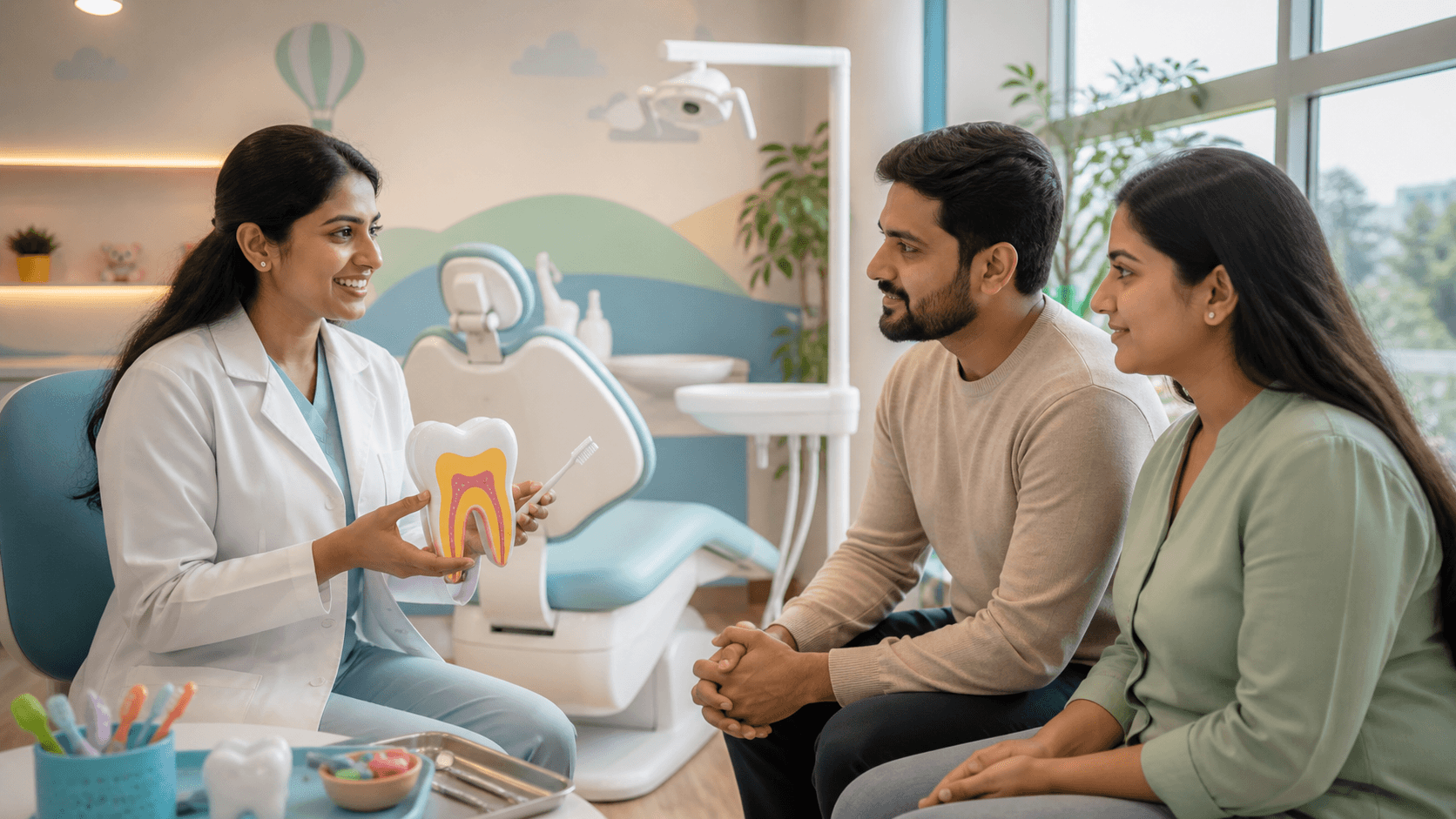
The first detailed visit provides the foundation for any decision. A relaxed, child-friendly appointment helps build trust and comfort. During this visit, the dentist will discuss medical and dental history, school routines, sports, and habits such as thumb sucking, nail biting, or mouth breathing. The goal is to help the child feel safe in the chair and to understand their overall health and lifestyle.
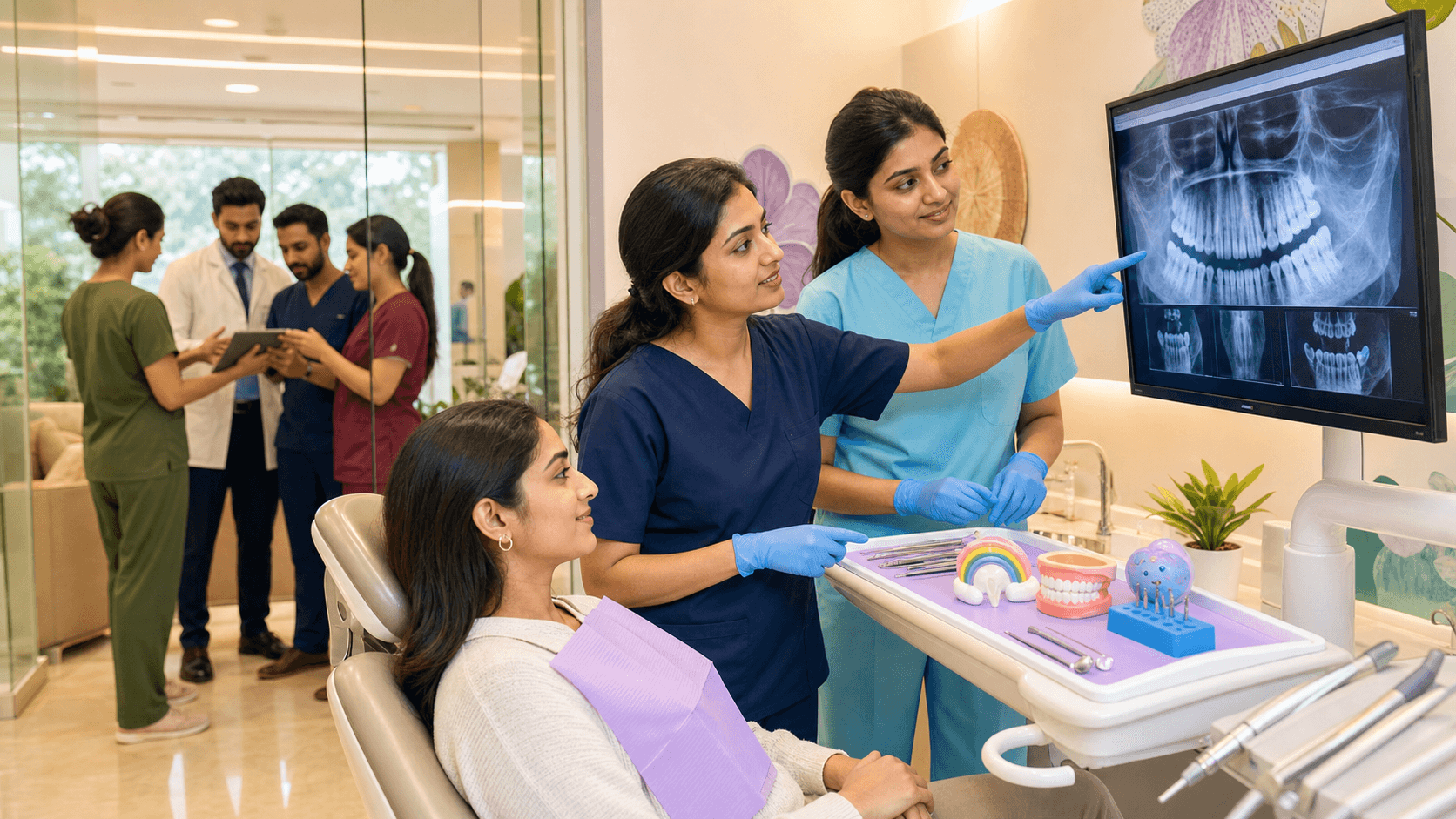
Modern pediatric and orthodontic practices rely on tools that give a clear picture of what is going on beneath the surface. These records help the dentist evaluate not only what is visible today, but also what is developing in the jaw and under the gums.
- Digital X-rays to check roots, missing teeth, and jaw positions
- 3D scans to assess crowding and available space with high accuracy
- Photographs of the teeth, smile, and face for growth tracking
- Growth prediction based on these records over time
When deciding between early braces and space maintainers, dentists consider a range of bite, spacing, and growth factors. They look at whether baby teeth have been lost too soon, whether crowding or spacing matches what is typical for the child's age, and whether the upper and lower teeth are meeting correctly. They also evaluate bite depth (such as deep bites or open bites), jaw alignment (for example, when the lower jaw is too far back or forward), and any breathing or speech concerns that may be linked to the bite.
This information helps the dentist understand not just how the teeth look today, but how they are likely to grow over the next few years.
When Space Maintainers Protect Future Alignment
Space maintainers are small devices that hold room open for adult teeth after a baby tooth is lost earlier than expected. If that space closes, the new tooth may come in rotated or in the wrong position. Space maintainers generally come in two forms:
- Fixed: Gently attached to nearby teeth so they stay in place
- Removable: Taken out for cleaning and sometimes used in older or very responsible children
They are usually recommended when a child loses a baby tooth too early, and this often happens due to common causes like:
- Cavities that were too deep to save the tooth
- Planned extractions to remove badly damaged teeth
- Dental trauma, such as a fall that knocks out a tooth
The best timing is often during the younger school years, when many baby teeth are still present and adult teeth are starting to appear. In many situations, a space maintainer is a simpler choice than early braces because its main purpose is to preserve the space that nature intended, not to move many teeth at once.
Pediatric dentists check space maintainers regularly. During follow-up visits, they assess comfort, review cleaning techniques around the metal parts, and provide dietary guidance, such as avoiding very sticky foods that may bend or loosen the device. These appointments are usually brief and are also used to track growth so that the maintainer can be removed at the appropriate time, once the adult tooth is ready to come in.
When Early Braces Guide Jaw Growth and Bite
Early braces, also called Phase I treatment, are used while a mix of baby and adult teeth is present. This phase is not always focused on complete straightening. It often aims to correct jaw growth or bite problems that are better addressed earlier in life. Tools used in this stage can include:
- Limited braces on selected front or back teeth
- Expanders to gently widen a narrow upper jaw
- Clear or removable appliances to guide jaw position or help with certain habits
A pediatric dentist or orthodontist may suggest early braces instead of, or in addition to, space maintainers when there are signs that the bite or jaw development needs active guidance. This can include very severe crowding that cannot comfortably fit within the jaw without assistance, crossbites that may shift the jaw to one side, open bites or underbites that affect chewing or speaking, and large overjets where front teeth protrude and may chip easily. They also consider ongoing habits like thumb or finger sucking when those habits are affecting the bite.
For many families in Bangalore, starting treatment in late summer or early autumn can work well. The back-to-school period is a time when routines are forming, and there is often a window before major exams. This can make it easier for children to adapt to new braces, for parents to support new cleaning routines, and for follow-up visits to fit around classes and activities.
How Pediatric Dentists Choose Braces vs Space Maintainers
Both space maintainers and early braces are interceptive tools, but they serve different purposes. A simple way to compare them is:
- Main goal
- Space maintainers: Protect space for future teeth
- Early braces: Actively correct bite, jaw growth, and significant crowding
- Treatment duration
- Space maintainers: Often remain until the related adult tooth is ready to erupt
- Early braces: Typically a shorter phase, followed by a break before any comprehensive treatment later
- Comfort and appearance
- Space maintainers: Small and often positioned toward the back of the mouth
- Braces or expanders: More visible and may feel bulkier at first
- Home care
- Both require thorough brushing and careful eating habits
- Braces often require additional time for cleaning around brackets and wires
At a specialty pediatric or orthodontic practice, the dentist will guide parents through these options. Digital images or simulations are often used to show how the teeth may look with different plans. Families are encouraged to ask about planning treatment in phases, taking into account school exams, travel, and long-term orthodontic needs.
The final plan is always individualized. Dentists consider growth records, the child's personality and ability to cooperate, school schedule, and family preferences. The aim is to choose a conservative approach that still protects the bite and guides growth in a healthy way.
Next Steps to Support Your Child's Smile in Bangalore
Waiting until all permanent teeth have appeared before scheduling an orthodontic check can sometimes limit treatment options. The window between about 6 and 9 years of age is often very helpful for spotting issues early. At this stage, many problems can be guided with smaller steps, rather than waiting until they become more complex and harder to manage.
When planning a first visit with a specialist pediatric dental or orthodontic team, it may help to think ahead about:
- Any family history of crowded teeth or jaw surgery
- Questions about how long treatment might take in total
- Concerns your child has about comfort or appearance
- Whether you would like to discuss comfort aids or sedation options for very anxious children
Scheduling visits outside major festive breaks or exam seasons can also be helpful, as it gives your child time to adjust without additional pressures. A skilled pediatric dental and orthodontic team, supported by appropriate technology, can provide gentle, child-centered care that respects your child's pace while safeguarding their long-term oral health and smile.
Protect Your Child's Smile With Expert, Gentle Dental Care
Our team at Ridgetop Dental International is here to make every visit comfortable while giving your child the strong foundation they need for lifelong oral health. Schedule an appointment with our trusted pediatric dentist in Bangalore so we can address concerns early and keep their smile bright. If you have questions or want help booking a visit, simply contact us and we will walk you through the next steps.