Everyday Situations That Call for a Dental Surgeon in Bangalore
Sudden tooth pain, a chipped tooth after a fall, or a swollen face at the end of a workday are relatively common concerns. In a busy city like Bangalore, everyday incidents can quickly become dental emergencies that require more than a routine check-up. Understanding when you may need a dental surgeon, rather than a standard dental visit, can help protect both your oral health and your overall well-being.
A dental surgeon is a dentist with advanced training in surgical procedures involving the teeth, gums, and jaw. These specialists manage complex extractions, infections, implants, and trauma. Receiving the right level of care at the right time can help relieve pain, save natural teeth, and prevent complications.
Everyday Dental Emergencies Need Expert Care
Life in Bangalore is fast-paced. Between office commutes, crowded metros, two-wheeler rides, recreational sports, and festive events, unexpected dental problems can arise without warning. Common everyday situations that can lead to dental emergencies include:
- A slip on a wet surface outside your apartment or office
- An accidental hit to the mouth with a cricket or football
- Biting something hard and cracking a tooth
- Sudden facial swelling after a previously mild toothache
A general dentist focuses primarily on check-ups, cleanings, and basic treatments, while a dental surgeon has advanced training to handle surgical and more complex conditions. A dental surgeon typically:
- Has advanced training in surgical dental procedures
- Is experienced in managing complex extractions and infections
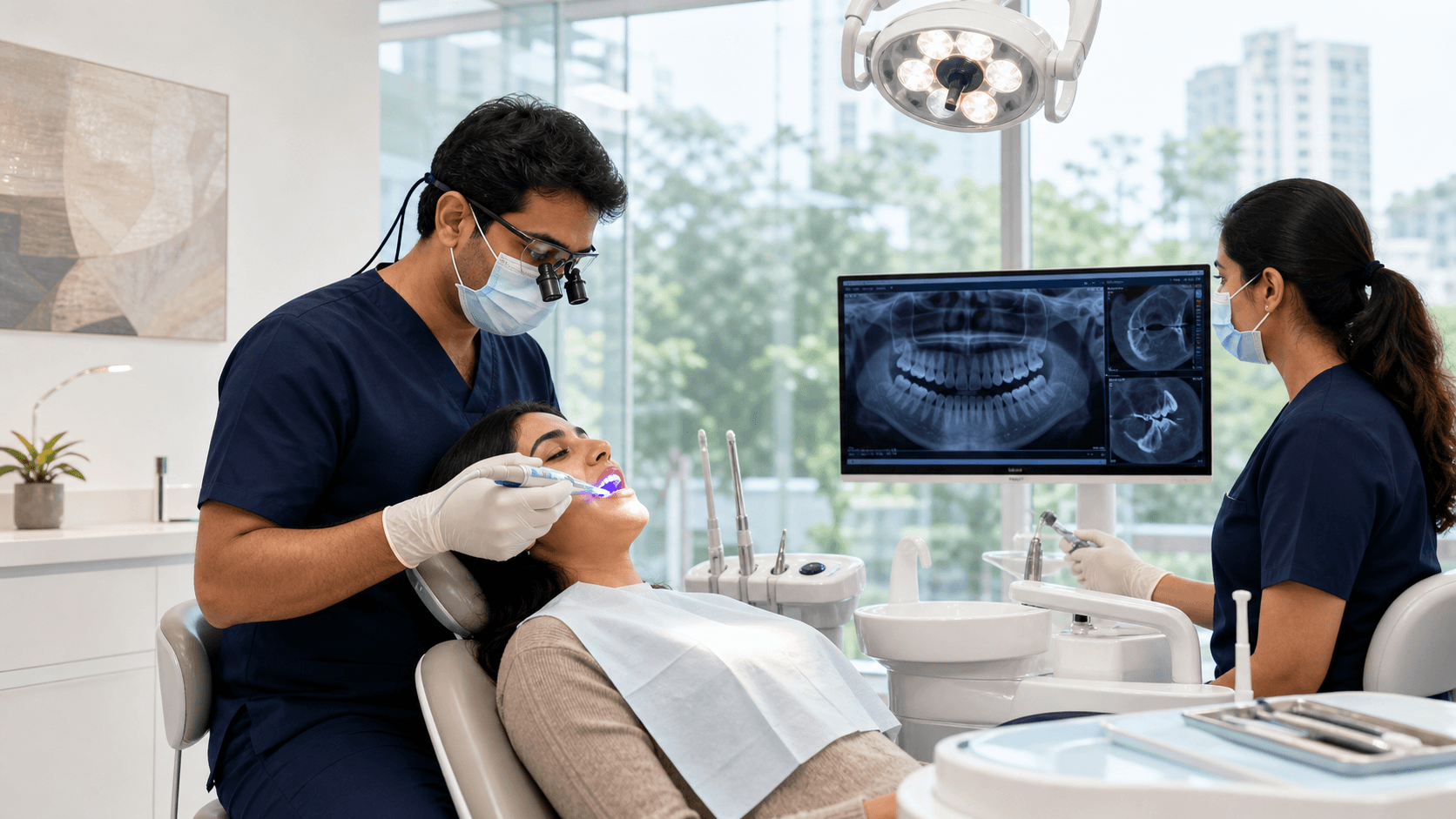
- Uses technology such as digital X-rays and 3D scans for precise diagnosis and treatment planning
- Can treat conditions involving the bone and gums when required
Timely access to a skilled dental surgeon in Bangalore helps ensure that problems are managed at their source, not just temporarily relieved. This can be the difference between preserving a tooth and losing it. Specialist group practices are designed to provide both routine care and advanced procedures, with multiple MDS-trained specialists available when more complex treatment is needed.
When Sudden Tooth Pain Becomes an Urgent Warning
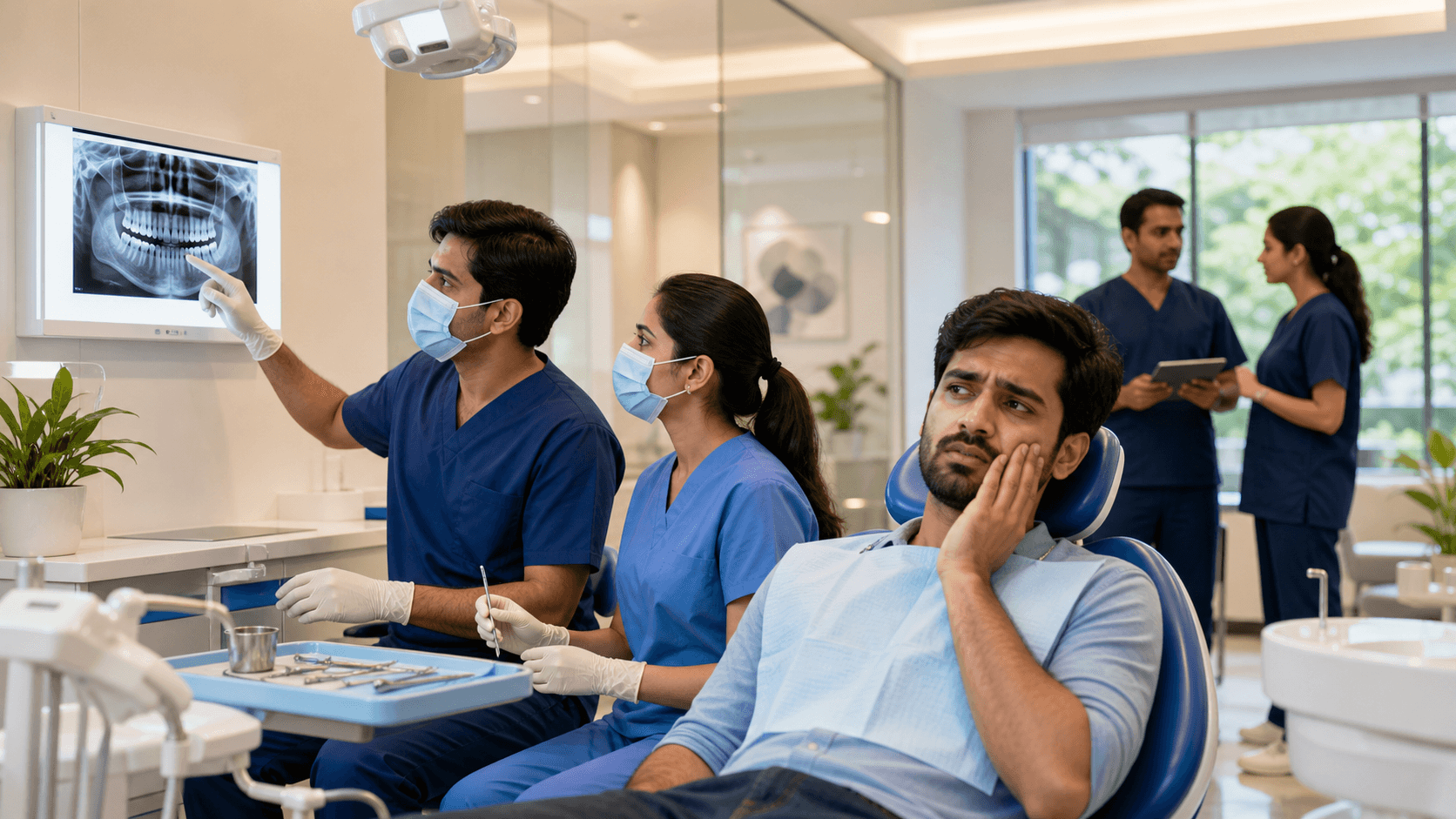
Tooth pain that interferes with your ability to work, sleep, or eat comfortably is a signal that your body needs attention. Severe tooth pain may require a dental surgeon when it is linked to issues such as:
- Deep decay that has reached the nerve
- Cracked or fractured teeth
- Impacted wisdom teeth pressing on nearby teeth
- Failed or complicated root canal treatments
- Infections that have spread into the bone or surrounding soft tissue
It may be more serious than simple "sensitivity" if you notice any of the following warning signs:
- Swelling in the cheek or gums
- Fever or feeling generally unwell
- Pain that wakes you up at night
- Pain after a fall or blow to the mouth
- Difficulty opening your mouth or chewing on one side
In these cases, a dental surgeon will usually evaluate both the tooth and the surrounding structures to identify the true source of pain and prevent complications. A dental surgeon will usually:
- Use digital diagnostics such as X-rays or scans to evaluate the tooth and surrounding bone
- Provide appropriate local anesthesia to keep you comfortable during treatment
- Perform procedures such as surgical extraction, apicoectomy (cleaning an infection at the tip of the root), or emergency drainage of an abscess when indicated
Delaying care can increase the risk of the infection spreading, which may lead to larger swellings, deeper abscesses, and difficulty eating or speaking. Seeking early treatment helps relieve pain, supports healing, and protects your general health.
Accidents, Sports, and Dental Trauma in Urban Life
Urban living comes with certain risks, and dental trauma can occur during routine travel, play, or daily movement around the city. Everyday incidents that can result in dental trauma include:
- Two-wheeler skids on wet or uneven roads
- Sudden stops in a vehicle causing you to hit your mouth against a surface
- Corporate or recreational sports such as football or cricket
- Children falling on playgrounds or stairs
- Slips in parking areas, stairwells, or building entrances during rain
These situations can lead to injuries that range from mild soft-tissue damage to more serious tooth and jaw complications. They can lead to:
- Knocked-out teeth
- Teeth broken at or below the gum line
- Fractured roots or jawbone
- Cuts on the gums, lips, or tongue
- Injuries affecting the bone and tissues around the teeth
Before reaching a dental clinic, a few immediate steps can help protect your teeth and tissues and may improve the chances of saving an injured tooth:
- For a knocked-out permanent (adult) tooth, hold it by the crown, gently rinse if visibly dirty, and keep it moist in milk or in a clean container with saliva. If advised and it is safe for you, you may place it back in the socket or keep it under the tongue, taking care to avoid swallowing.
- Apply gentle, steady pressure with clean gauze or a clean cloth to help control bleeding.
- Do not scrub the tooth or remove any attached tissue.
- Collect and bring any broken tooth fragments to the clinic.
A specialist group practice can manage dental trauma in a systematic way, with attention to both urgent care and long-term stability. With on-site imaging, minor oral surgery facilities, splinting of loose teeth, and care for injured bone and soft tissues, the focus is on both immediate pain relief and long-term function and appearance. Follow-up visits are important to support proper healing, especially when front teeth or the bite are involved.
Everyday Habits That Quietly Damage Your Smile
Not all dental problems start with a noticeable accident. Many develop slowly due to daily habits that may seem minor. In a high-demand, technology-driven lifestyle, it is common for people to:
- Grind their teeth at night during stressful periods
- Bite nails during traffic, meetings, or while concentrating
- Use their teeth to open packets or tear materials
- Clench the jaw while working on a laptop or screen for long hours
Over time, these habits can contribute to long-term changes in the teeth, gums, and jaw joints, affecting comfort and function. Over time, these habits can contribute to:
- Worn-down teeth and flattened biting surfaces
- Cracked enamel and small fractures
- Jaw joint (TMJ) pain, stiffness, or clicking
- Loose teeth or gum recession
When the damage extends beyond superficial enamel wear, a dental surgeon may be needed to restore stability and protect the teeth and supporting structures. A dental surgeon may be needed for:
- Bite adjustment to balance how teeth meet
- Minimally invasive gum surgeries to help cover or stabilise receding areas
- Corrective jaw procedures in more severe bite or jaw alignment problems
- Surgical support for restorations, crowns, or other protective treatments
Advanced diagnostics such as digital bite analysis and 3D imaging allow early detection of structural changes. Addressing concerns early often makes treatment more conservative and helps preserve natural tooth structure.
When Replacing Missing Teeth Requires a Surgical Expert
Missing teeth affect more than appearance. They can influence how you chew, speak, and interact socially and professionally. Many people notice:
- Difficulty chewing certain foods at family gatherings, celebrations, or daily meals
- Hesitation to smile in photographs or in professional settings
- Less clear speech when front teeth are missing
Dental implants and some types of bridges require a dental surgeon because they involve the jawbone and gums. These treatments may include:
- Precise placement of implants into the jawbone
- Bone grafting where bone is thin, inadequate, or missing
- Managing areas near the sinus in the upper jaw
- Shaping and supporting the gums so that the final teeth look and feel natural
In a specialist clinic, the implant process is typically planned in stages so the implant can be placed safely, heal properly, and support a natural-looking final restoration. The implant process usually involves:
- A thorough assessment of bone and gum health
- 3D planning for accurate implant positioning
- Gentle surgical placement with appropriate anesthesia
- A healing phase during which the implant integrates with the bone
- Final restorations designed to blend with your natural teeth and support comfortable chewing and speech
When carefully planned and performed by trained specialists, implants can provide stable, long-term support and help maintain jawbone in areas where teeth are missing, while fitting into a busy lifestyle and regular oral hygiene habits.
Protect Your Smile with the Right Specialist Team
Persistent tooth pain, visible damage after an accident, long-standing habits that wear teeth down, and missing teeth that affect daily life are all signs that it may be time to consult a dental surgeon in Bangalore. Early evaluation helps keep problems from progressing and supports both comfort and confidence.
At Ridgetop Dental International in Bangalore, we function as a specialist group practice with MDS-trained dentists and technology-supported care. Our team focuses on understanding your daily needs, explaining your treatment options clearly, and planning personalised care that supports long-term oral health, function, and appearance, while prioritising your comfort and safety at every step.
Take The Next Step Toward Comfortable, Confident Oral Health
If you are considering corrective jaw or facial surgery, our experienced team at Ridgetop Dental International is ready to guide you through every stage of care. Schedule a consultation with our trusted dental surgeon in Bangalore to discuss your concerns, review treatment options, and understand what to expect. We will take the time to answer your questions, explain your personalized plan, and help you feel confident in your decision. To book an appointment or ask about availability, simply contact us today.