Why Every Bangalore Home Needs a Dental Emergency Kit
A chipped tooth from hard sweets, a fall during a weekend cricket match, or a sudden toothache late at night, dental emergencies can arise without warning. In a busy city like Bangalore, getting prompt care is not always simple. Traffic, long commutes, or heavy rain can delay you when you are trying to reach a dental emergency dentist in Bangalore.
A simple dental emergency kit at home will not replace professional treatment, but it can make a meaningful difference in those first few minutes. It can help you control pain, protect teeth and gums, and stay calm until you reach a dental clinic. Early, appropriate care at home often improves what happens next in the dental chair.
Knowing a True Dental Emergency Versus a Minor Issue
Not every tooth problem is an emergency. Some situations need urgent treatment, while others can safely wait for a scheduled visit. In general, problems involving major trauma, severe pain with swelling, uncontrolled bleeding, or suspected fractures should be treated as urgent.
Urgent problems that need prompt care from a dentist include:
- A permanent tooth that has been knocked out
- Severe toothache with swelling in the face or jaw
- Cracked, broken, or badly chipped teeth, especially with sharp edges
- Continuous or heavy bleeding from the mouth
- Injuries to lips, tongue, cheeks, or gums
- Strong pain when biting after a hit to the jaw, or if you suspect a jaw fracture
By contrast, some symptoms are usually less serious and can often wait for a normal visit. These are still worth discussing with your dentist, but they generally do not require immediate emergency care if there is no severe pain, swelling, or bleeding.
Issues that are usually less serious and can often wait for a normal visit include:
- Mild sensitivity to hot, cold, or sweet foods
- Slight gum irritation or light bleeding when brushing
- Small mouth ulcers that are not very painful
- A slightly loose filling or crown without pain or sharp edges
A home dental kit is for first aid only. It is there to provide a safe way to manage the problem until you can see a dental professional. Delaying proper care can make the problem harder to treat later, even if symptoms seem to improve for a short time.
What to Stock in Your Dental Emergency Kit
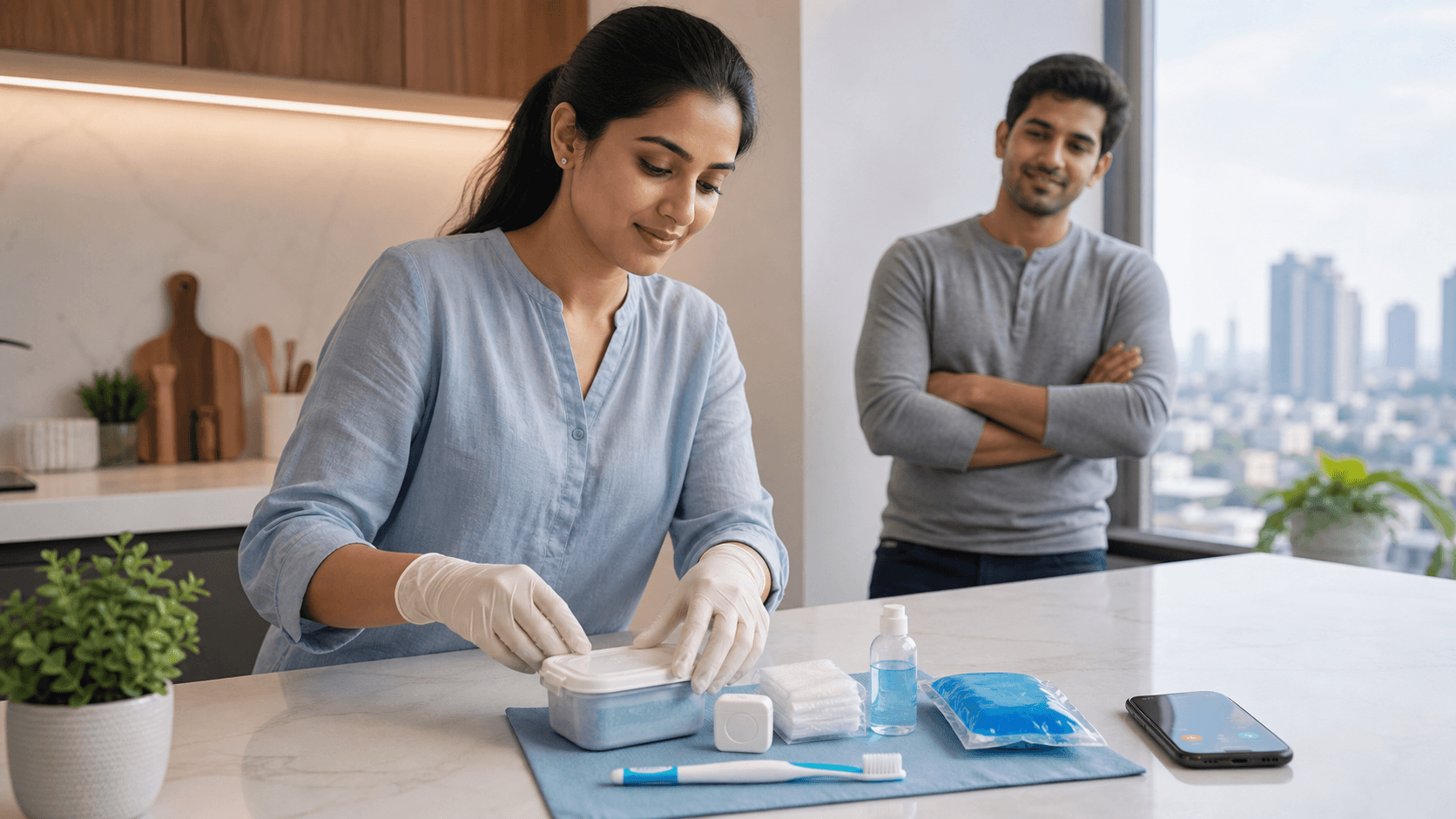
Think of your kit as a compact resource for reassurance. You want items that help with pain, protect teeth and gums, and support cleanliness. It helps to group supplies by purpose so you can find what you need quickly during a stressful moment.
For pain and swelling control:
- Over-the-counter pain relievers like paracetamol or ibuprofen, in adult and child doses, strictly as advised by your doctor
- Clear labels indicating who can take each medicine, and recommended timing
- Cold packs or reusable gel packs to place on the outside of the cheek for swelling
For protection and temporary coverage:
- Sterile gauze pads and cotton rolls to press on bleeding areas or to protect sore spots
- Dental wax or orthodontic wax to cover rough braces, wires, or sharp broken edges
- Temporary filling or dental repair material from a pharmacy to cover a lost filling or chipped crown until you see a dentist
For safe handling and gentle cleaning:
- A clean container with a lid for a knocked-out tooth or tooth fragments
- Cold milk or saline (kept at home) for storing a tooth
- Saline solution and an alcohol-free mouth rinse for gentle rinsing
- A small, soft toothbrush for careful cleaning around an injured area
- Disposable gloves, a small flashlight, and a compact mirror so you can see inside the mouth without putting bare fingers in
Bangalore-Specific Additions and Smart Storage Tips
City life in Bangalore adds a few special considerations to your kit planning. Long drives, school sports, and busy festive periods can all increase the risk of minor dental injuries, and they can also make it harder to reach care quickly. Planning for local realities, especially traffic and monsoon delays, can make your kit more practical when you need it most.
Plan for traffic and monsoon delays by adding:
- Extra gauze and an additional cold pack
- Backup pain medicine within its expiry date
- A fully charged power bank to keep your phone on during calls with a dentist
- A printed card with important contacts, including your usual dentist and nearby hospitals
It also helps to think ahead for times when injuries are more likely, such as sports seasons, school activities, and festivals. If someone in the family wears braces or aligners, a few extra orthodontic-related items can prevent small problems from becoming painful.
Consider sports, school, and festive times:
- Mouthguards for anyone who plays contact sports or often rides a two-wheeler vehicle, plus a spare in the kit
- For those on braces or clear aligners: extra orthodontic wax, a small pair of clean scissors or nail clippers for carefully trimming sharp plastic edges if advised, and a spare aligner case
- Sugar-free gum or xylitol mints to help keep the mouth moist and fresher when you are out for long hours, as supportive measures and not as treatment
How and where you store the kit matters as much as what you put in it. Medicines and supplies can degrade with heat and moisture, and a kit that is hard to reach or unknown to other adults is less useful in an emergency. A small amount of routine maintenance keeps everything ready.
For storing and maintaining the kit:
- Keep it in a cool, dry place, away from steam and direct sun, where all adults in the household know it is stored
- Avoid steamy bathrooms; store it in a bedroom cabinet or hall cupboard instead
- Put together a smaller travel version for your car or everyday bag if you commute across the city
- Use child-safe containers with latches so young children cannot open medicines or sharp items
- Check expiry dates every three to six months, and refresh stock before major holidays or school sports seasons
- Add simple written notes on what each item is for, plus allergy reminders for family members
When and How to Use Each Item Safely
In a stressful moment, it is easy to turn a small problem into a bigger one. A calm, step-by-step approach helps. If you are ever unsure, it is safest to call a dental professional for guidance while you prepare to travel to a clinic.
For a knocked-out permanent tooth:
- Hold the tooth by the crown (the white top part), never by the root
- If it is dirty, gently rinse it in clean water for a second; do not scrub or use soap
- If the person is an adult and calm, you may try to place it back in the socket, facing the right way, and ask them to bite gently on gauze
- If replantation is not possible, place the tooth in cold milk or saline in the clean container
- Use gauze to control bleeding and a cold pack on the face, then reach an emergency dentist in Bangalore as quickly as you can, as early care gives the tooth a better chance
For broken teeth or lost fillings:
- Rinse the mouth gently with saline or clean water
- Cover any sharp edge with dental wax or temporary filling material
- Use a cold pack on the cheek if there is swelling or pain
- Keep any broken piece in the clean container and show it to the dentist
For bleeding and soft tissue injuries:
- Put on disposable gloves
- Place a folded, sterile gauze pad over the bleeding area and ask the person to bite down or hold firm pressure for several minutes
- Avoid repeatedly removing the gauze to check, as this can restart bleeding
- If bleeding does not slow down, or if it stops and then restarts, this is an emergency and needs prompt professional care
For braces and wire troubles:
- Place orthodontic wax over any bracket or wire that is rubbing the cheek or lips
- If a wire is very long and clearly poking the cheek, and you have been advised before by your orthodontist, you may gently trim the very end with clean scissors, but stop if you are unsure
- Never try to pull out a wire that is still attached to brackets
Some actions can worsen the injury or irritate soft tissues, even if they seem like common home remedies. It is especially important to avoid harsh chemicals and improvised tools inside the mouth. Extra caution is also needed for children, pregnant women, and anyone with existing health issues, because seemingly "small" interventions can have bigger consequences.
Actions you should avoid in a dental emergency:
- Do not place aspirin, clove oil, or any strong liquid directly on gums or teeth; this can burn soft tissues
- Do not use pins, toothpicks, or other sharp objects to remove stuck food
- Do not use super glue or any household glue on teeth, crowns, or dentures
- With children, pregnant women, or anyone with existing health issues, be especially careful and seek professional advice by phone before trying anything new
Making Dental Emergency Readiness a Family Habit
A home dental emergency kit is only helpful if it is ready and accessible when you need it. Choose a clear date to assemble or refresh your kit, such as before school reopens, before the festival season, or before a major family trip. Treat it like checking smoke alarms or restocking essential medicines.
Have a simple family discussion about dental emergencies. Show older children where the kit is kept and explain, in a calm and reassuring way, what they can and cannot do. Save the contact details for your trusted dental clinic in your phones so you can get quick guidance if something happens. During your regular preventive check-ups, you can also ask the dental team to review your family's sports, travel, and dental history and advise you on what makes the most sense to keep in your home dental emergency kit.
Get Fast Relief From Dental Emergencies Today
If you are in pain or facing a sudden dental issue, our team at Ridgetop Dental International is ready to help right away. Schedule an appointment with our emergency dentist in Bangalore so we can quickly assess your situation and provide the right treatment. If you prefer to speak with us first or have questions about your specific concern, simply contact us and we will guide you on the next steps.