Regain Confidence After Implants with Smarter Chewing
Getting dental implants is a big step toward strong teeth and a confident smile. Once treatment is done, most people are excited to eat normally again, but also a little nervous. Questions like "Can I bite on this?" or "Is this too hard for my new implant?" are very common.
A clear chewing plan helps protect your implants and makes eating feel natural again. The goal is not just to avoid damage, but to help the bone and gums heal in a healthy way so your smile feels as good as it looks. A step-by-step approach to food, bite balance, and sensitivity can make the difference between worry and comfort.
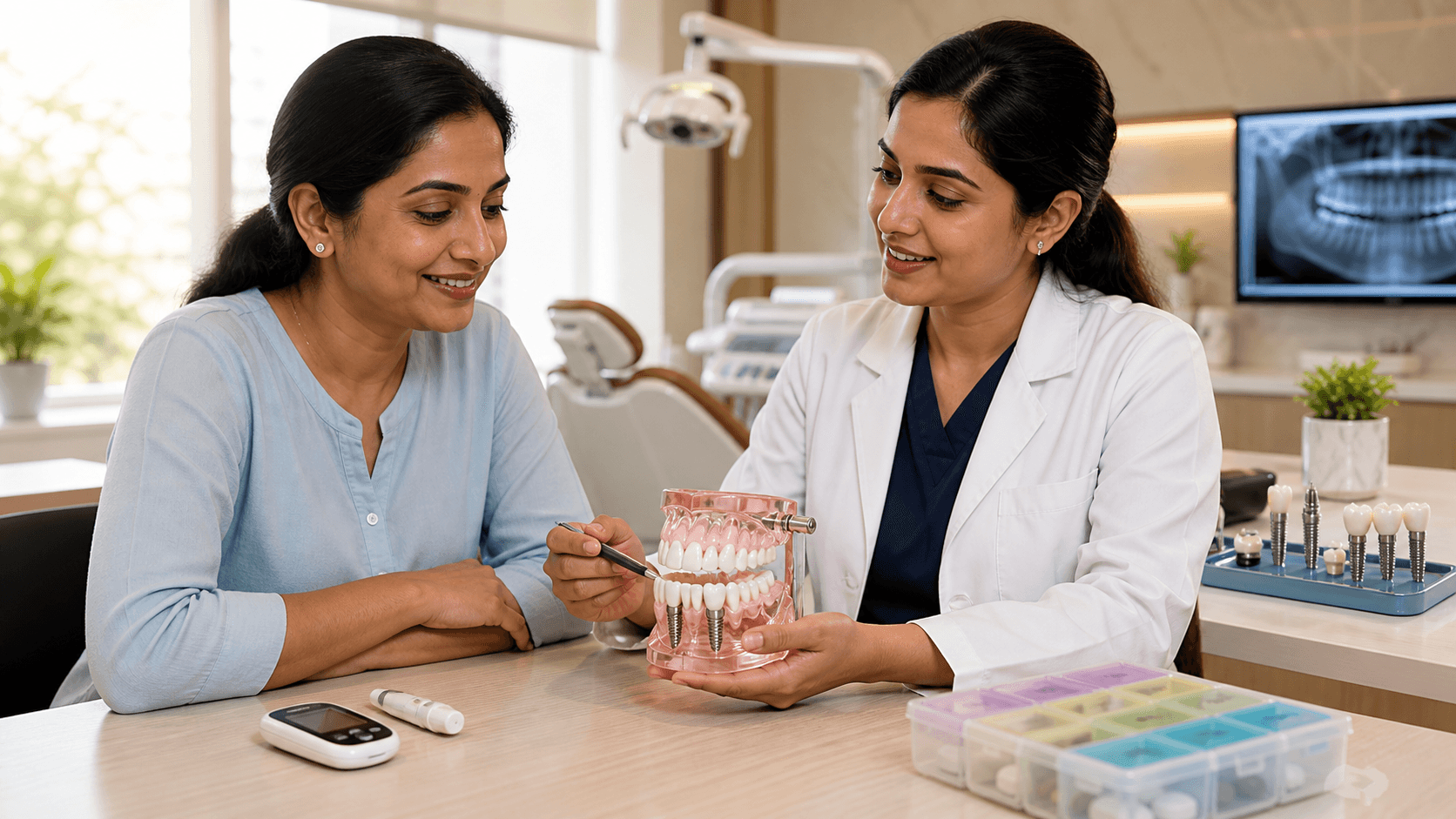
At Ridgetop Dental International in Bangalore, we guide patients through every stage after implant treatment. That includes early diet choices, bite checks, and support when food feels strange or sensitive. This post walks through the healing timeline, diet progression, bite calibration, and how to manage food sensitivity during smile restoration in Bangalore.
Understanding the Healing Timeline After Implants
Right after implant placement, your body starts healing around the new titanium post in the bone. This happens in stages, and each stage affects how safely you can chew.
You can think of the healing phases like this:
- Immediate post-surgery: first few days, focus on rest and protection
- Early healing: first weeks, gums settle and bone starts to bond
- Osseointegration: deeper bone healing that gives the implant long-term strength
During early healing, some patients wear a temporary tooth or bridge. This is mainly for looks and light function, not for heavy chewing. The final implant crown, which comes later, is designed for long-term chewing strength. Your chewing patterns have to change as you move from no load, to light load, and finally to full chewing.
Common questions we hear include:
- When can I chew directly on the implant?
- How hard can I bite?
- Does hot weather or dehydration affect healing?
In a warm city like Bangalore, staying hydrated and generally healthy supports your body as it heals. It is still important to protect the area from infections and not overload the implant too soon. At Ridgetop Dental International, we depend on regular follow-ups and advanced diagnostics to check how the bone is fusing to the implant and to guide you on safe chewing milestones as you move through each stage.
Stepwise Diet Progression for Safe Chewing Recovery
Good chewing rehab usually follows a gentle, step-by-step diet plan. You do not jump from liquids to crunchy snacks overnight. Each stage lets your implant, gums, and muscles adapt.
A basic progression often looks like this:
- Cool liquids and smooth foods right after surgery
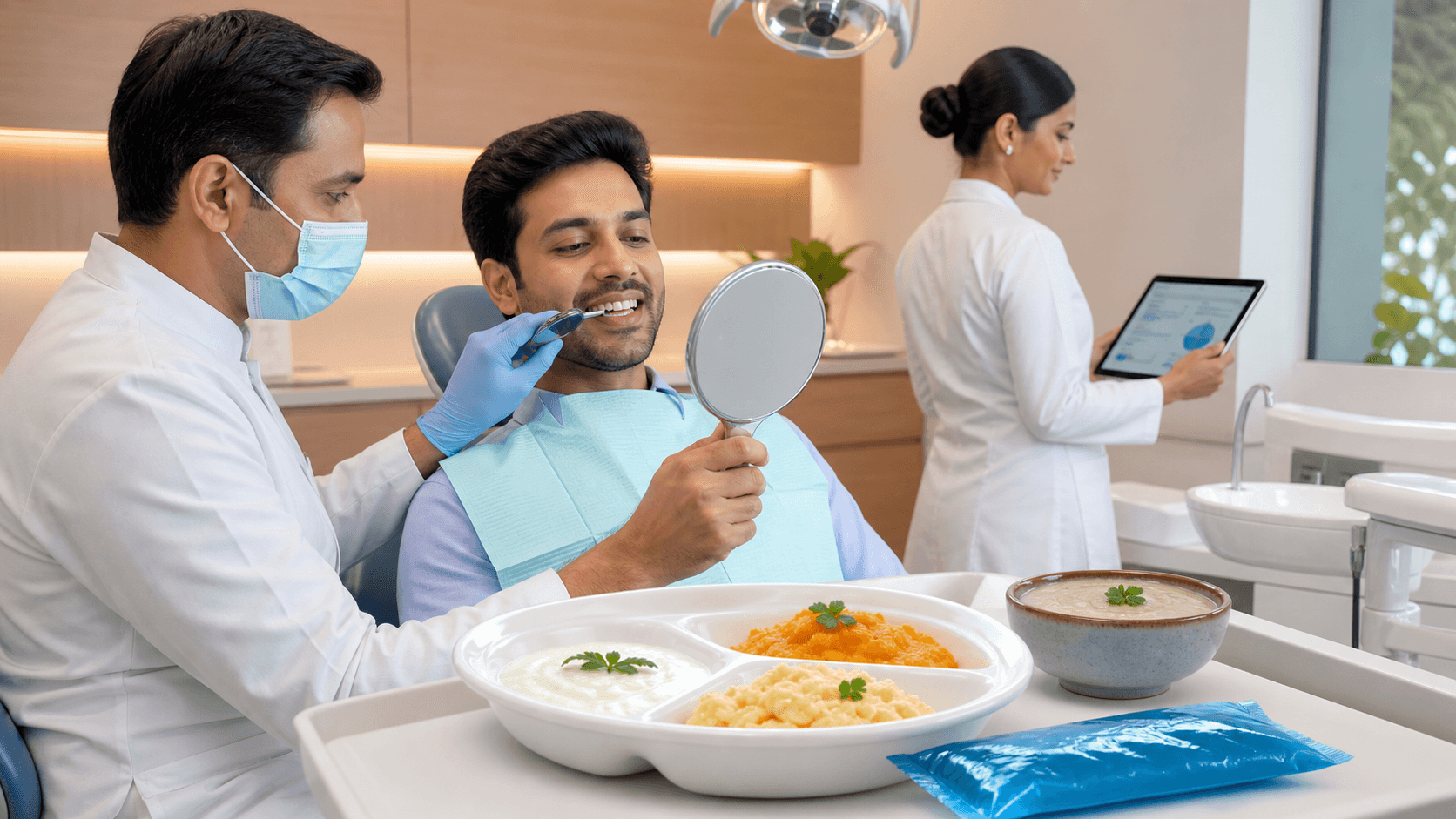
- Soft, mashable foods once initial soreness eases
- Tender, easy-to-chew meals while the bone is firming up
- Firmer, fibrous foods only after your specialist gives the green light
In Bangalore, especially around late summer, the focus should be on soft, hydrating, and nutritious foods. Helpful ideas include:
- Light, cool or room-temperature soups
- Idlis and well-steamed dhokla with a soft, airy texture
- Well-cooked rice with dal, soft khichdi, or curd rice
- Overcooked lentils, mashed vegetables, and soft paneer
- Fruits with soft flesh, cut into small pieces, like ripe banana or papaya
Spicy, fried, or very hot foods can irritate tender gums. Hard items like nuts, chikki, or very chewy sweets can stress the new implants if introduced too early. That does not mean you must avoid your favorite local dishes forever, but early on, it helps to:
- Lower spice levels
- Keep food at moderate temperature
- Cut or mash foods into smaller, easier bites
Nutrition still matters. Protein, vitamins, and good hydration help your body heal bone and soft tissue. Because every mouth and every implant plan is different, it is safer to follow a plan your implant specialist creates for you, instead of using a generic online list. This is especially true for full-mouth smile restoration in Bangalore, where many implants and teeth work together.
Bite Calibration and Occlusal Fine-Tuning After Implants
Once your final implant crown or bridge is placed, the next key step is bite calibration, also known as occlusal adjustment. This is the process of making sure your upper and lower teeth meet evenly when you close and chew.
If one spot is a bit "high" on a new implant crown, it can carry too much pressure. That can lead to:
- Local soreness or tenderness when biting
- Tired chewing muscles or jaw discomfort
- Headaches or a feeling that your teeth do not fit together
These high spots are often very small, but your jaw can feel them. At Ridgetop Dental International, our specialists adjust the bite with gentle refinements on the crown surface. The process is usually quick and comfortable. Digital bite analysis and other advanced tools can help find subtle imbalances that you might only sense as uneven pressure when you chew certain foods.
It is important not to ignore these signs. As you move from soft to firmer foods, notice how your bite feels and whether any of the following happen:
- Do your teeth touch first on one side?
- Does one tooth feel "sharper" or heavier when you close?
- Do you avoid chewing on a certain area without meaning to?
If anything feels off, your implant team can fine-tune the bite so pressure is spread in a safer, more natural way.
Managing Food Sensitivity, Discomfort, and Nerve Responses
After implant treatment, it is normal to feel more aware of your bite. Mild pressure or a "new tooth" feeling when chewing on the implant side can be part of the adjustment phase. But there is a difference between normal sensations and warning signs.
Normal early feelings might include:
- Slight tenderness when you first use that side
- A feeling that the tooth is "different" from the others
- Short-lived sensitivity that fades as you chew softer foods
Warning signs that need attention include:
- Sharp pain on biting
- Persistent throbbing that does not settle
- Pain that worsens with chewing or continues at rest
- Gum swelling or a bad taste near the implant
Food-related triggers can include very cold drinks, steaming hot coffee or tea, spicy or acidic foods, and strong uneven chewing forces. Simple coping strategies while you adjust include:
- Starting to chew on the opposite side, then slowly including the implant side
- Letting very hot or cold foods reach a mild temperature before eating
- Cutting food into small pieces to reduce chewing effort
- Chewing slowly and mindfully so your jaw can find a comfortable path
Any sudden change in how your bite feels, a new looseness, or swelling around the implant should be checked by your implant specialist in Bangalore. Early support helps protect the long-term success of your smile restoration in Bangalore and keeps small issues from growing bigger.
Rediscover a Confident Smile With Personalized Care
If you are ready to improve your smile, our team at Ridgetop Dental International is here to guide you through every step. Explore your options for smile restoration in Bangalore and see how tailored treatments can rebuild both function and confidence. To schedule an appointment or ask questions about your specific concerns, simply contact us and we will help you get started.