Regain Your Smile and Bite After Tooth Loss
Losing a tooth affects more than your smile. It can change how you chew, how clearly you speak, and how comfortable you feel laughing or talking in a group. A gap in your mouth can start to feel like a gap in your confidence.
Dental bridges are a well-established way to fill that space and bring back normal function. They can restore the look of your smile and help you chew more comfortably again, often in a shorter time than many people expect. Leaving the gap as it is can lead to shifting teeth and bite problems, so it is worth understanding your options early.
Our team in Bangalore focuses on advanced, evidence-based care. With an all-MDS group of dentists and a patient-centred approach, we plan dental bridges around your mouth, your routine, and your long-term oral health, not just the missing tooth.
How Dental Bridges in Bangalore Restore Everyday Comfort
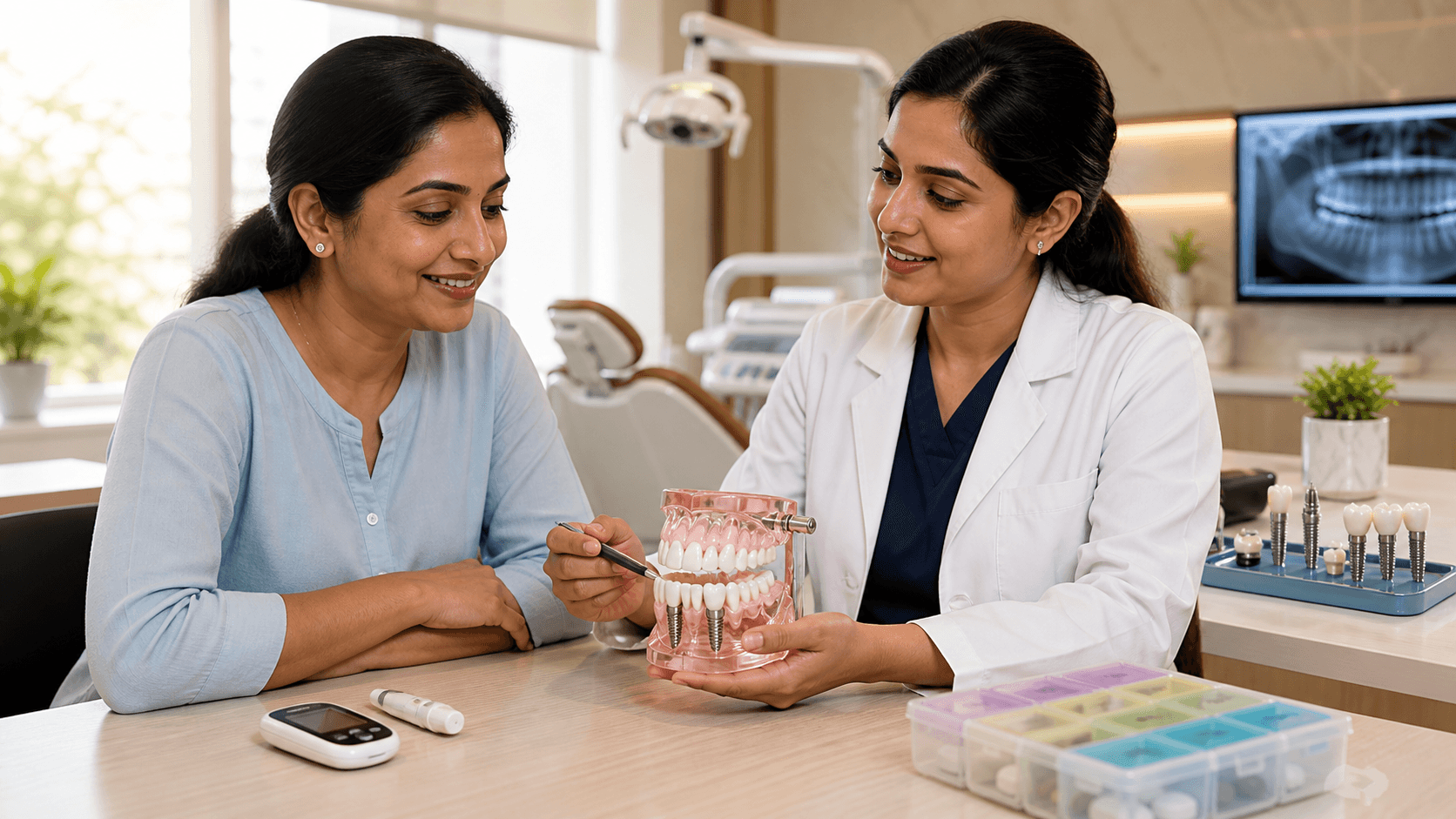
A dental bridge is a set of artificial teeth that fills the space left by missing teeth. It is usually supported either by the natural teeth on each side of the gap or by dental implants placed in the jaw. The bridge is fixed in place, so you do not take it out like a removable denture.
A well-made bridge is shaped and coloured to blend with your natural teeth. Most people around you will not notice it is there. The goal is straightforward: your smile should look and feel as close to natural as possible.
Everyday benefits can include:
- More comfortable chewing, including foods with mixed textures
- Better biting balance, so one side of the mouth does not do all the work
- Clearer speech, since front teeth help form certain sounds
- Less pressure on remaining teeth, which can help protect them over time
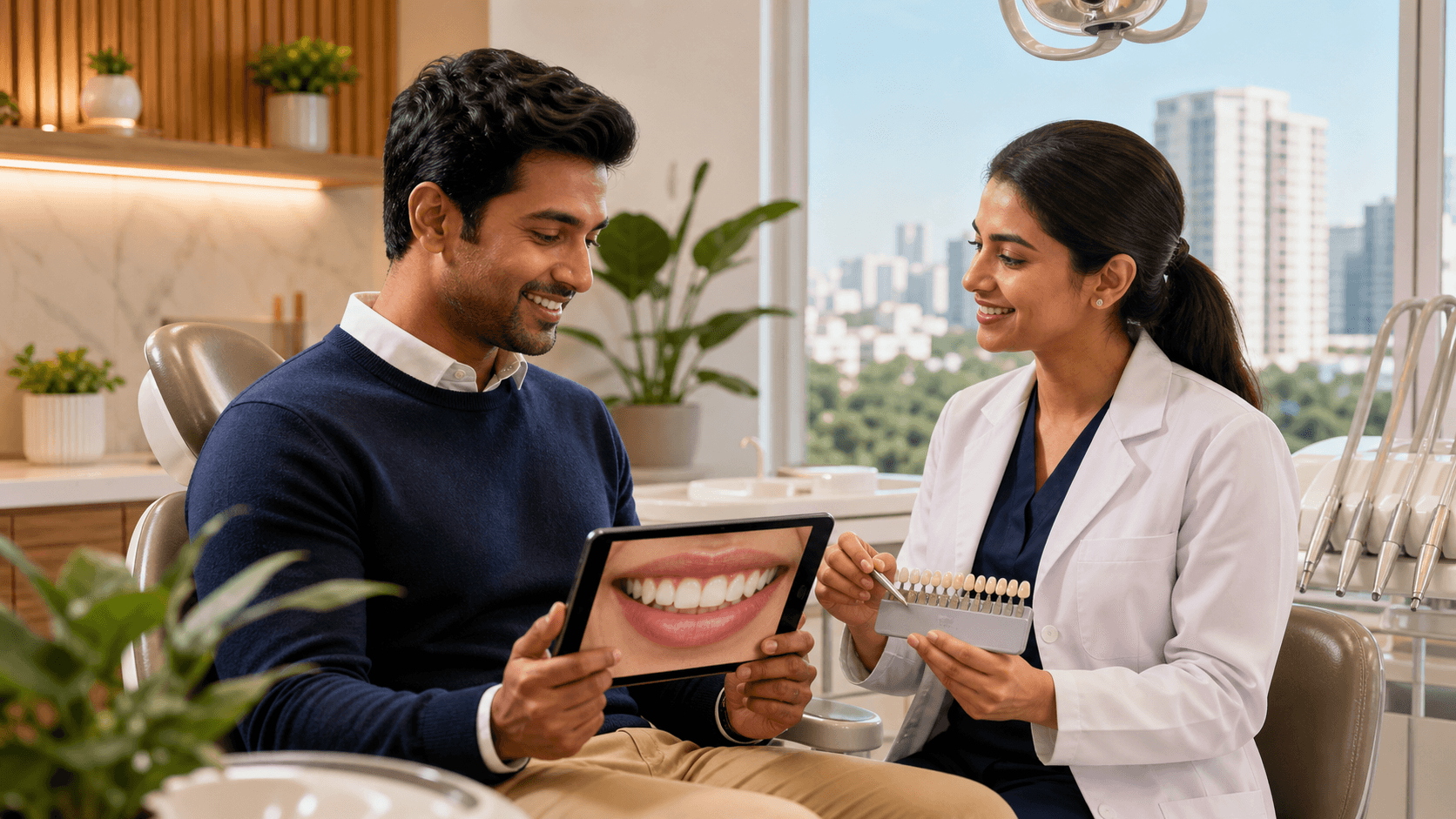
There is also an emotional aspect. When the space is filled with a natural-looking bridge, many people feel more relaxed while smiling, talking, or posing for photos. Shade matching and custom shaping help the new teeth suit your face, skin tone, and existing teeth, which can be important in both social and professional settings.
Step-by-step Process to Get a New Dental Bridge
Getting dental bridges in Bangalore usually involves a few planned appointments. The exact steps can vary, but the basic flow is similar for most patients.
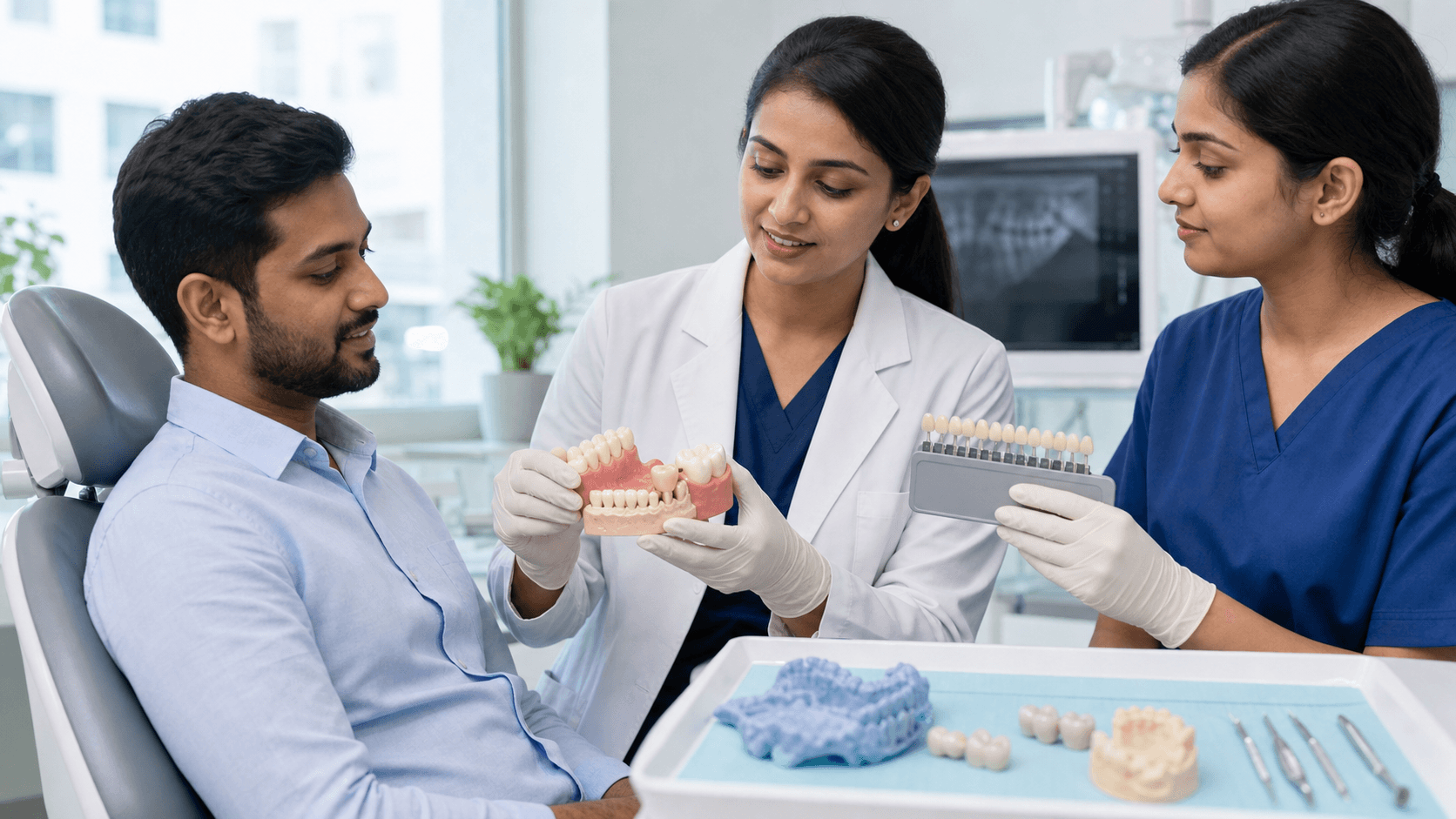
First comes a detailed consultation. During this visit, the dental team typically:
- Discusses your concerns, medical history, and lifestyle
- Checks your teeth, gums, and bite
- Takes digital X-rays and scans, if needed, to study the bone and supporting teeth
An all-MDS team reviews these findings together so the plan is not just about filling a gap, but about how your whole bite will work with the bridge in place.
Clinical visits often include:
- Tooth preparation, if a traditional bridge is planned, with the nearby teeth shaped so they can support the bridge
- Or implant placement, if an implant-supported bridge is chosen, which may need healing time
- Impressions or digital scans, to design the bridge to fit your mouth closely
- A temporary bridge, so you are not left with an open space while the final bridge is made
- Final fitting and adjustment, where your bite, comfort, and appearance are checked before fixing the bridge in place
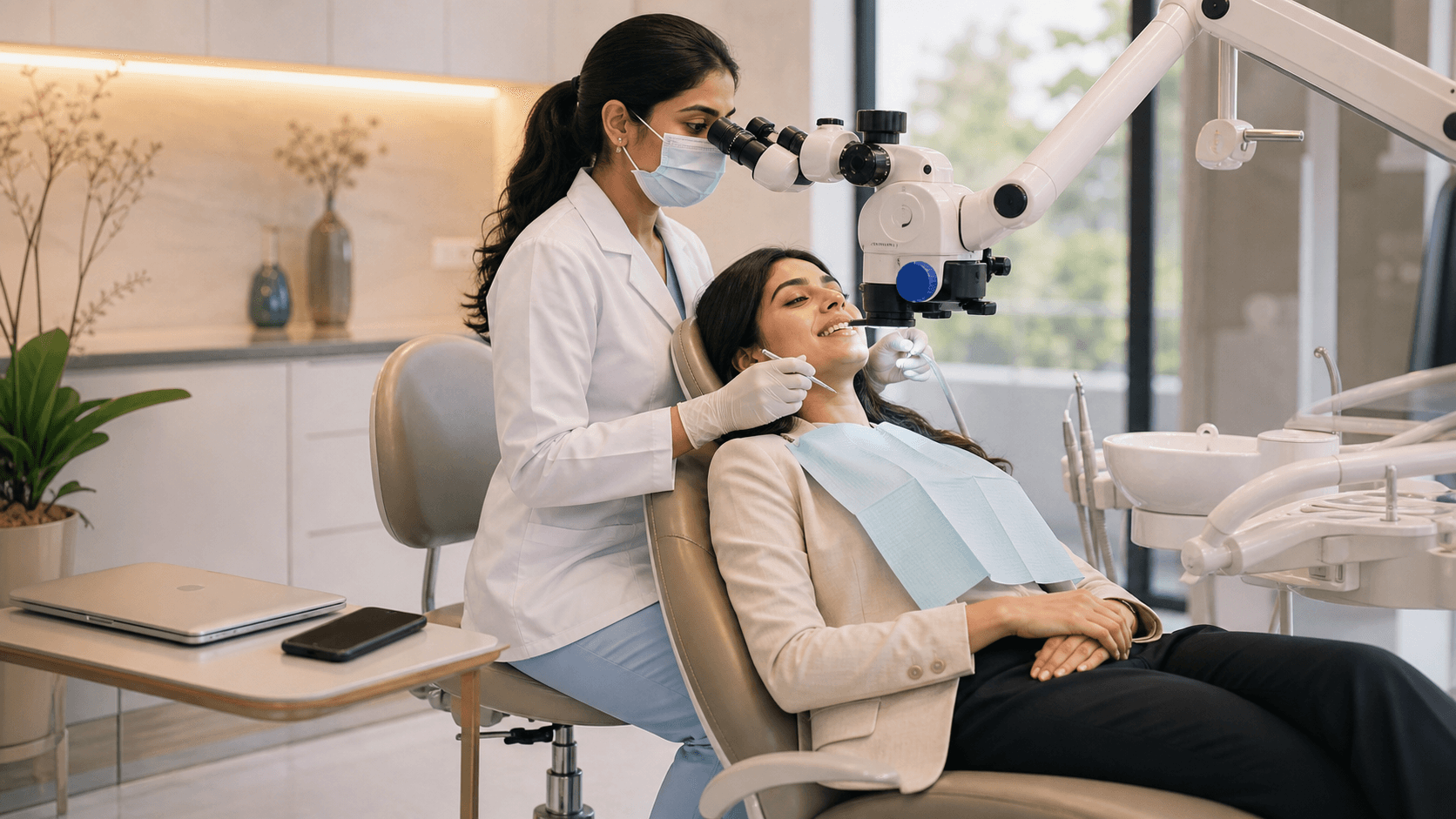
Local anesthesia is used to keep you comfortable during the procedures. Advanced tools help improve accuracy and fit, which can mean fewer adjustments later. Appointments can usually be planned around work or school schedules so treatment feels easier to manage.
Choosing the Right Type of Dental Bridge
Not all bridges are the same. The right style depends on where the missing tooth is, how strong the nearby teeth are, and what your long-term goals look like.
Common bridge options include:
- Traditional tooth-supported bridge, fixed to prepared teeth on both sides of the gap
- Implant-supported bridge, attached to implants in the jaw instead of natural teeth
- Cantilever bridge, supported from only one side when there is no tooth on the other side
- Maryland or resin-bonded bridge, attached with a metal or ceramic wing to the back of nearby teeth, often used in some front-tooth cases
Each type has its own strengths. Traditional bridges are widely used and can be a good choice when the neighbouring teeth already need crowns. Implant-supported bridges do not depend on nearby teeth, and they can help support the jawbone in the area of the missing tooth, which may benefit long-term bone health.
Maryland and cantilever bridges may be used in carefully selected cases to preserve more natural tooth structure, but they are not right for every space in the mouth. The dental team's role is to guide you through the options, explain what they mean day to day, and recommend what fits your bite, gum condition, and future maintenance plans.
Life After Getting Dental Bridges in Bangalore
Once your bridge is fitted, there is an adjustment phase. At first, the bridge can feel slightly different from your natural teeth. You might notice:
- Mild sensitivity to hot or cold as the supporting teeth settle
- A different chewing pattern for a few days
- Slight awareness of the bridge edges with your tongue
Most people adapt within days to a couple of weeks. Eating softer foods at first, then slowly returning to your regular diet, can make this easier. If anything feels sharp, too high, or uncomfortable, the bite can be reviewed and adjusted.
Long-term success depends a lot on home care. With a bridge, you need to clean carefully around and under the artificial tooth or teeth.
Helpful tools include:
- A soft toothbrush, used twice daily around the bridge and gums
- Floss threaders, to slide floss under the bridge and clean the gap between the artificial tooth and gums
- Interdental brushes or a water flosser, to reach areas under and around the bridge
Regular dental check-ups are important to monitor the fit, the health of the supporting teeth, and your gums. With good care and professional reviews, a high-quality bridge can serve you for many years and may help you avoid more complex treatments in the future.
Planning a Healthier Smile with Expert Care
Missing teeth do not just leave a space; they can slowly change your whole bite. Neighbouring teeth may tilt into the gap, the opposite tooth can over-erupt, and chewing forces may shift to fewer teeth, which can lead to extra wear. Replacing missing teeth in good time helps keep the rest of your mouth more stable.
At Ridgetop Dental International in Bangalore, care is led by specialists with advanced diagnostics and strict sterilization and infection control. The focus is on providing clear information and thoughtful options, so you can plan your dental bridges in Bangalore with confidence and support your oral health for the long term.
Restore Your Confident Smile With Lasting Bridge Solutions
If you are ready to replace missing teeth with a solution that looks and feels natural, explore our customized dental bridges in Bangalore. At Ridgetop Dental International, we carefully evaluate your bite, gum health, and long-term goals to design bridges that fit comfortably and function reliably. Schedule an appointment so we can walk you through your options, pricing, and treatment timeline in detail, or contact us online to get started.