Tiny Smiles, Big Clues: Why Early Orthodontic Checks Matter
Orthodontic problems often start quietly while your child still has many baby teeth. By the time the issues are very obvious, treatment can become longer and more involved. Early checks help us catch small changes in the teeth and jaws before they turn into bigger bite problems.
A pediatric dentist in Bangalore looks at more than just cavities. We study how your child grows, how they feel about treatment, and how to keep them calm in the chair. With the help of digital tools, we can notice tiny shifts in tooth position, jaw growth, and habits that parents and even general dentists might not see yet.
School admissions, holidays, and activity breaks often give families more flexible time. Summer and the early monsoon months are great for relaxed, unhurried visits. Children are not rushing between exams and homework, so we can do a detailed orthodontic assessment without stress for them or for you.
Hidden Signs in Baby Teeth Most Parents Overlook
Baby teeth may be small, but they carry a lot of information about the future smile. When we examine a young child, we look closely at spacing, timing, and wear on these first teeth.
Some early clues include:
- Baby teeth with no gaps at all in a tiny mouth
- Teeth that are already twisting or overlapping
- Baby teeth that fall out very early because of decay or injury
- Flattened or chipped edges on front or back teeth
If baby teeth are very close together, there may not be enough room for the larger permanent teeth. On the other hand, gaps that close too quickly or do not match your child's age can also signal a space problem. When a baby tooth is lost too early, the teeth next to it can drift into that space and block the path of the adult tooth waiting underneath.
We also notice tooth wear that does not match your child's age. A shiny, flat surface on some teeth may mean grinding. Tiny chips might show that the bite is not balanced, or that upper and lower teeth are meeting in the wrong way. These patterns help us predict where trouble might show up later.
Jaw Growth Patterns Only Pediatric Specialists Track
Teeth are only one part of the story. The way the jaws and face grow affects how well your child can bite, chew, speak, and smile. Pediatric dentists are trained to watch these changes over time.
We pay attention to:
- Balance between the upper and lower jaw
- Chin position when the child smiles and rests
- Fullness of the mid-face and lips
- How the smile line follows the curve of the lips
Mouth breathing is another big clue. In a city like Bangalore, with pollution, dust, and allergy seasons, many children struggle with blocked noses. When a child breathes through the mouth most of the time, the upper jaw may grow narrower, and the lower face may appear longer. This can lead to crossbites or open bites that are easier to guide if we spot them early.
We also think about growth "windows". Using dental age, growth charts, and when needed, X-rays or scans, we try to time any orthodontic step to match your child's natural growth spurt. When treatment is done at the right time, it may be shorter, gentler, and more comfortable.
Subtle Habits That Quietly Shift Growing Teeth
Habits can move teeth just as surely as braces, only more slowly and silently. During regular visits, we look for small signs in how your child rests, swallows, and chews.
Thumb sucking and pacifier use are normal in very young children. The concern begins when these habits last too long or are very strong. Long-term sucking can cause:
- Front teeth to flare out
- An open bite, where front teeth do not touch
- A narrow upper jaw and crossbite
Tongue habits matter too. If a child pushes the tongue forward on every swallow, or keeps it between the teeth at rest, the front teeth may slowly move ahead. A trained pediatric dentist can often spot tongue thrust or unusual swallowing patterns just by gently watching how the mouth moves.
Chewing and speech also give us clues. A child who always chews on one side, avoids harder foods, or struggles with certain sounds might be protecting a sore tooth or an uncomfortable bite. This is not only about speech therapy, it can also be about orthodontic balance.
Bite Clues You Can See at Home Before School Starts
Parents can notice a lot with a simple home check in front of a mirror. It does not replace a professional exam, but it can tell you when to ask more questions.
Look at how the top and bottom teeth meet:
- Do the top front teeth cover almost all of the lower ones?
- Do the bottom teeth sit in front of the top teeth?
- Do any side teeth bite "inside out," with upper teeth inside the lower ones?
A small overbite is common, but if the top front teeth cover most of the lower teeth, or if the lower teeth sit clearly in front of the upper, it deserves attention. Crossbites, where some upper teeth bite inside lower teeth, are also worth checking.
Next, look at the "midline." Ask your child to smile naturally. Check whether the line between the two top front teeth matches the line between the two bottom front teeth, and if this pair lines up roughly with the center of the lips and nose. A small mismatch is common as teeth change, but a bigger or long-lasting shift can show a jaw or space issue.
School holidays and lighter activity schedules are a good time to do these home checks. If you notice something that worries you, you have room to plan visits, tests, and follow-ups before school and sports routines get busy again.
How Ridgetop Dental Makes Early Orthodontics Child-Friendly
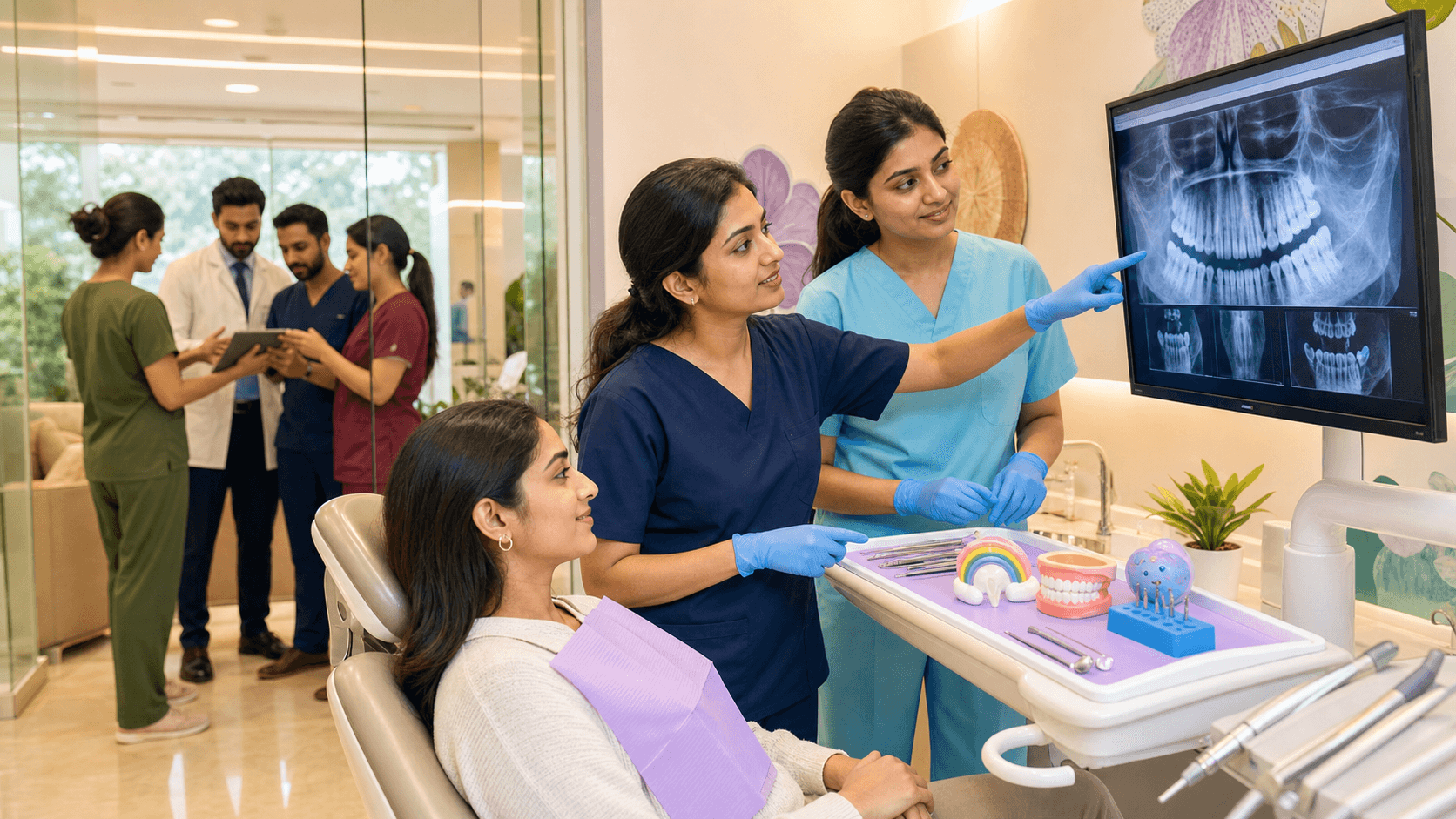
At Ridgetop Dental International in Bangalore, our pediatric dentists work closely with orthodontic specialists to understand each child's mouth as it grows. We use tools like digital X-rays, photos, and other modern imaging options to build a clear picture of jaw growth, tooth position, and habits. This helps us make plans that are specific to your child, not one-size-fits-all.
We know that children need a calm, kind approach. Our team focuses on:
- Simple, child-friendly explanations
- Gentle techniques to reduce discomfort
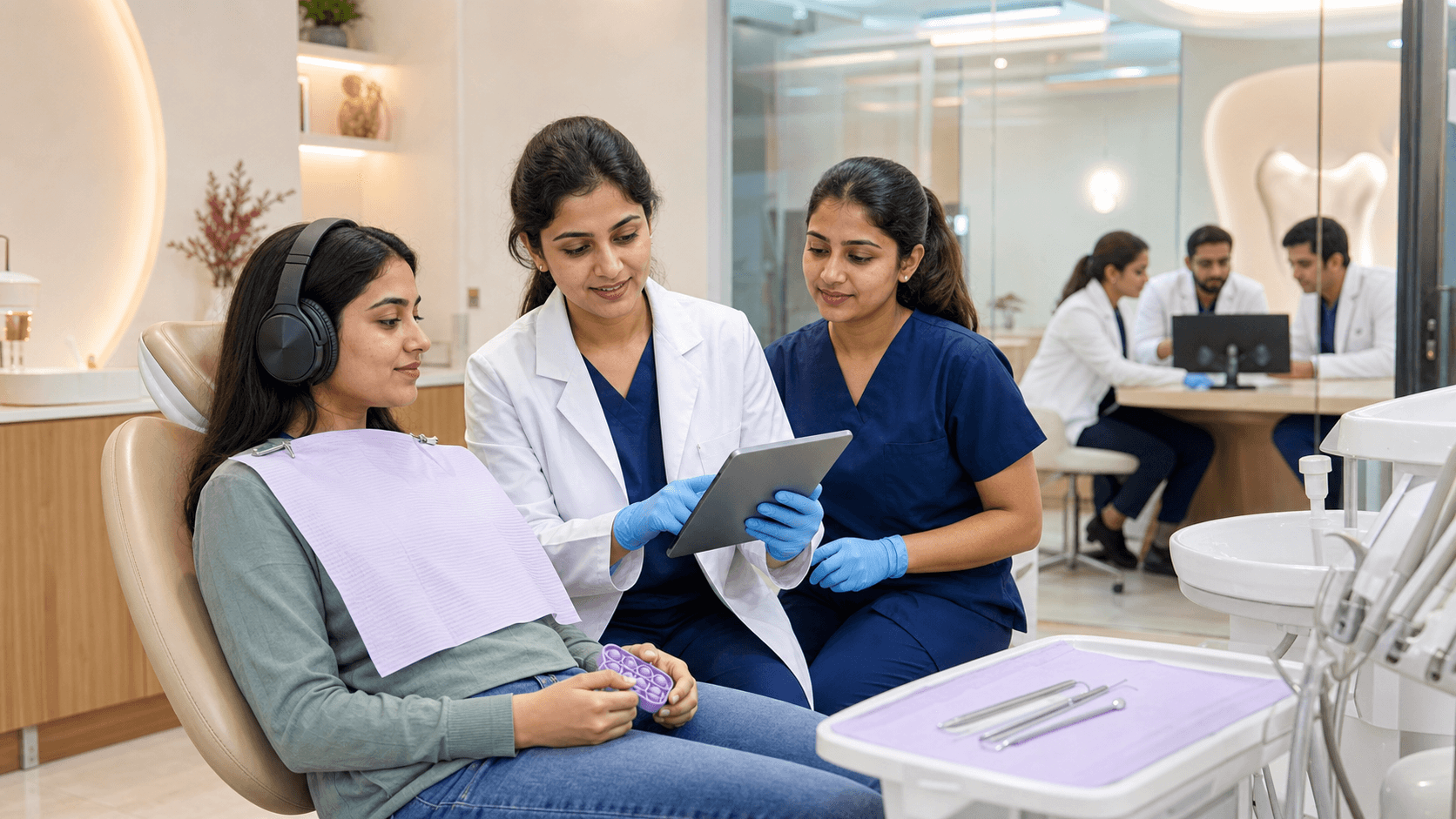
- Behavior guidance to help anxious children feel safe
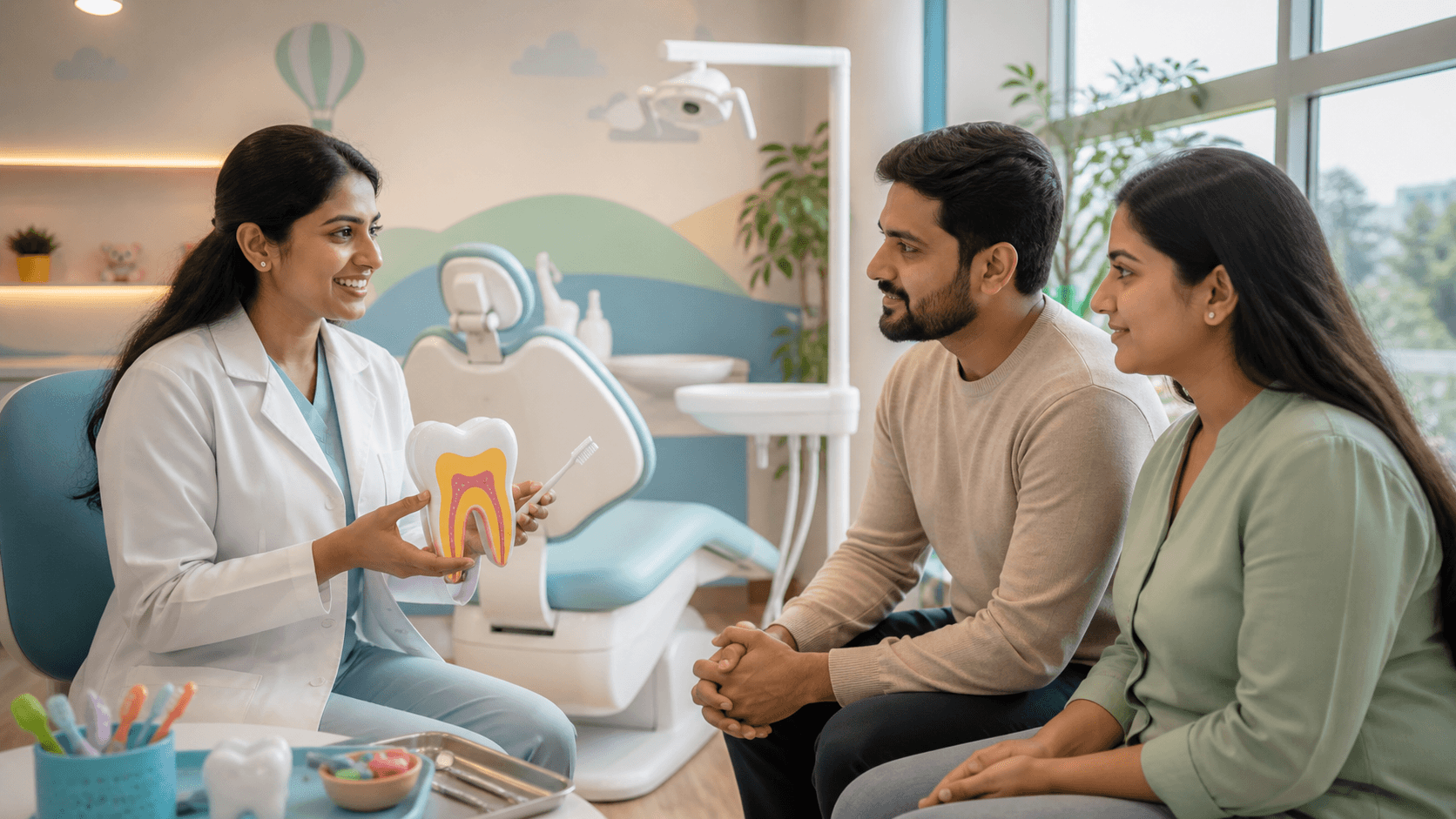
Parents are part of every step. We take time to explain what we see, what can wait, and what should be addressed earlier. Often, early orthodontic care is not about putting on braces right away. It can be about watching growth more closely, giving tips to break harmful habits, or making small guiding changes that protect space for adult teeth. This kind of thoughtful, staged care respects your family's schedule and supports a healthy, confident smile as your child grows.
Give Your Child a Confident, Healthy Smile Starting Today
At Ridgetop Dental International, we focus on gentle, personalized care that helps kids feel safe and supported at every visit. If you are looking for a trusted pediatric dentist in Bangalore, our team is ready to guide your child's oral health from the very first appointment. Reach out through our contact page to schedule a visit and take the next step toward strong, cavity-free smiles.